- September 9, 2026
- Posted by: admin
- Category: Blog
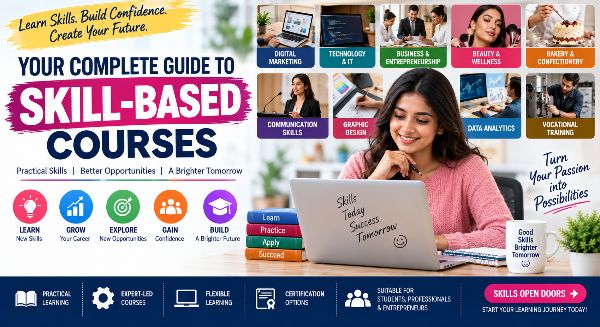
The world of education is changing rapidly. Today, earning a degree is valuable, but employers and businesses increasingly look for practical skills that can be applied in real-world situations. This is where skill-based courses play an important role.
Skill-based courses focus on developing specific technical, professional, creative, or vocational abilities. They can help students, job seekers, working professionals, and entrepreneurs improve their capabilities, explore new careers, and adapt to changing industry requirements.
Whether you want to learn digital marketing, communication, baking, beauty and wellness, technology, or business skills, choosing the right skill-based course can be an important step toward achieving your goals.
What Are Skill-Based Courses?
Skill-based courses are structured learning programs designed to develop practical abilities in a particular area.
Unlike education that focuses primarily on theoretical knowledge, skill-based training emphasizes learning by doing. Depending on the subject, learners may complete projects, assignments, demonstrations, practical exercises, simulations, or real-world tasks.
Examples include:
- Digital marketing
- Website development
- Graphic design
- Data analytics
- Artificial intelligence
- Communication skills
- Beauty and wellness
- Bakery and confectionery
- Hospitality
- Business management
- Vocational trades
These courses can range from beginner-level programs to advanced professional training.
Why Choose Skill-Based Education?
Practical skills can help learners become more confident and career-ready.
Some important benefits include:
- Develop job-ready abilities
- Improve professional confidence
- Learn practical techniques
- Explore new career options
- Upgrade existing skills
- Support entrepreneurship
- Prepare for freelance work
- Adapt to changing industries
Skill-based education can complement traditional academic qualifications and provide additional capabilities.
Who Can Benefit from Skill-Based Courses?
Skill-based learning is suitable for people at different stages of their careers.
Students
Students can use practical courses to supplement their academic education and explore career interests.
Job Seekers
Learning an in-demand skill can help job seekers strengthen their resumes and prepare for employment opportunities.
Working Professionals
Professionals can use short courses to upgrade their knowledge, learn new technologies, or prepare for career advancement.
Entrepreneurs
Business owners can learn marketing, communication, financial management, website development, and other skills that can support business growth.
Career Changers
People considering a career transition can use skill-based courses to explore a new field before making a major career decision.
Popular Categories of Skill-Based Courses
There are numerous areas to explore depending on your interests and career objectives.
Digital Marketing
Digital marketing courses may cover:
- Search engine optimization
- Social media marketing
- Paid advertising
- Content marketing
- Email marketing
- Analytics
These skills are useful for businesses, agencies, freelancers, and marketing professionals.
Technology Skills
Technology-focused courses can include:
- Web development
- Programming
- Data analytics
- Cloud technologies
- Artificial intelligence
- Cybersecurity awareness
Technology skills are increasingly relevant across many industries.
Communication Skills
Strong communication is valuable in almost every profession.
Courses may focus on:
- Spoken English
- Business communication
- Public speaking
- Presentation skills
- Professional writing
- Workplace communication
Improving communication can enhance both professional and personal interactions.
Beauty and Wellness
Beauty-related training can include:
- Makeup artistry
- Beautician training
- Hair styling
- Skincare
- Nail care
- Spa services
These courses can lead to employment, freelancing, or entrepreneurship.
Bakery and Confectionery
Aspiring baking professionals can learn:
- Bread making
- Cake preparation
- Pastry production
- Chocolate making
- Dessert preparation
- Cake decoration
- Bakery management
These skills can support careers in hospitality or independent bakery businesses.
Business and Entrepreneurship
Business courses can help learners understand:
- Business planning
- Sales
- Marketing
- Financial management
- Customer service
- Leadership
- Entrepreneurship
Practical business knowledge can help aspiring entrepreneurs make more informed decisions.
How to Choose the Right Skill-Based Course
Choosing the right course requires more than looking at the title. Consider your goals, interests, available time, and career plans.
1. Define Your Goal
Ask yourself what you want to achieve.
Are you looking to:
- Get a job?
- Earn a promotion?
- Start a business?
- Become a freelancer?
- Change careers?
- Develop a personal interest?
A clear goal makes course selection easier.
2. Review the Curriculum
Check whether the course covers the skills you actually want to develop.
Look for a curriculum that includes practical topics, exercises, projects, and current industry practices.
3. Consider the Learning Format
Skill-based courses may be offered through:
- Online classes
- Self-paced learning
- Live virtual sessions
- Classroom training
- Blended learning
Choose a format that fits your schedule and learning preferences.
4. Evaluate Instructor Expertise
Experienced instructors can provide practical knowledge and industry insights.
Look at the trainer’s qualifications, professional experience, teaching approach, and student feedback where available.
5. Look for Practical Training
A good skill-based course should provide opportunities to apply what you learn.
Projects and practical assignments can help you understand how skills work in real situations.
Certification and Skill Development
Many courses provide certificates after completion. A certificate can demonstrate participation and successful completion of a program, but practical ability remains extremely important.
To strengthen your professional profile, combine certification with:
- Practical projects
- Portfolio work
- Internships
- Work experience
- Demonstrable skills
The combination of knowledge and practical application can make your profile more valuable.
Online Skill-Based Learning
Online education has made skill development more accessible. Learners can study from home, access digital resources, and often choose schedules that fit around work or education.
Online learning can be particularly useful for people who:
- Have limited time
- Work full-time
- Live far from training centers
- Prefer self-paced education
- Want to learn specialized subjects
However, successful online learning requires consistency and self-discipline.
The Importance of Practice
Learning a skill requires more than watching lessons or reading course materials.
A simple learning cycle is:
Learn → Practice → Apply → Review → Improve
For example, someone studying digital marketing can create a sample campaign. A learner studying makeup can practice different looks. An aspiring baker can experiment with recipes and presentation.
Practical application turns information into usable skills.
Building a Professional Portfolio
A portfolio can demonstrate your abilities to potential employers or customers.
Depending on your field, a portfolio may include:
- Website projects
- Marketing campaigns
- Graphic designs
- Photography
- Makeup work
- Bakery creations
- Writing samples
- Business projects
Documenting your progress can also help you recognize how your skills improve over time.
Skill-Based Courses and Entrepreneurship
Skill development can create opportunities beyond traditional employment.
For example, a learner can use acquired skills to start:
- A digital marketing agency
- A freelance service
- A home bakery
- A beauty studio
- An online consulting business
- A web development service
- A training business
Combining professional skills with basic business knowledge can create new income opportunities.
Keep Learning as Industries Change
Technology and business practices continue to evolve. A skill that is valuable today may require updating tomorrow.
Successful professionals therefore make continuous learning part of their careers.
You can stay current by:
- Taking advanced courses
- Following industry developments
- Practicing new techniques
- Attending workshops
- Learning new tools
- Connecting with professionals
Lifelong learning helps you remain adaptable.
Common Mistakes to Avoid
When choosing skill-based courses, avoid:
- Enrolling without a clear objective
- Selecting a course only because it is popular
- Ignoring the curriculum
- Choosing based solely on price
- Starting too many courses at once
- Failing to practice
- Expecting instant career results
The best results come from selecting relevant training and consistently applying what you learn.
The Future of Skill-Based Education
As technology transforms workplaces, practical and adaptable skills will continue to be important. Employers increasingly need people who can learn new tools, solve problems, communicate effectively, and apply knowledge in real-world situations.
Skill-based education can help bridge the gap between learning and practical workplace requirements.
Conclusion
Skill-based courses provide a practical pathway for people who want to improve their careers, explore new professions, or develop entrepreneurial capabilities. From digital marketing and technology to beauty, baking, communication, and business, there are countless opportunities to learn skills that can be applied in real-world situations.
The key is to choose a course based on your goals, focus on practical learning, practice consistently, and continue upgrading your abilities.