
- June 15, 2026
- Posted by: admin
- Category: Blog
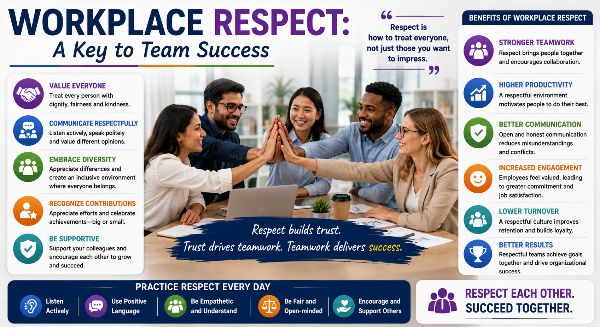
In every successful organization, workplace respect serves as the foundation for strong teamwork, effective communication, and long-term growth. Regardless of industry or job role, employees perform better when they feel valued, appreciated, and treated with dignity. Respect in the workplace goes beyond simple politeness—it involves recognizing the contributions of others, embracing diversity, and fostering a culture of trust and collaboration. Organizations that prioritize workplace respect often experience higher productivity, better employee engagement, and stronger team performance.
Understanding Workplace Respect
Workplace respect refers to treating colleagues, managers, clients, and stakeholders with fairness, courtesy, and consideration. It involves valuing different perspectives, listening actively, and acknowledging the contributions of others.
Respect creates an environment where employees feel safe expressing ideas, sharing feedback, and participating in team discussions without fear of judgment or discrimination.
Why Workplace Respect Matters
Respect is essential for creating a positive and productive work environment. When employees feel respected, they are more motivated, engaged, and committed to organizational goals.
A respectful workplace reduces conflicts, improves communication, and encourages cooperation among team members. It also strengthens trust, which is critical for effective collaboration.
Building Trust Through Respect
Trust and respect are closely connected. Teams that demonstrate mutual respect are more likely to trust one another and work together effectively.
When employees consistently show honesty, reliability, and consideration for others, trust develops naturally. This trust enables teams to solve problems faster and achieve goals more efficiently.
Respect and Effective Communication
Communication plays a central role in workplace success. Respectful communication involves listening attentively, speaking professionally, and valuing the opinions of others.
Employees who communicate respectfully are better able to resolve misunderstandings, provide constructive feedback, and maintain positive professional relationships.
Embracing Diversity and Inclusion
Modern workplaces bring together people from different backgrounds, cultures, experiences, and perspectives. Respecting diversity helps create inclusive environments where everyone feels valued.
Inclusive teams benefit from a wider range of ideas and viewpoints, leading to greater creativity, innovation, and problem-solving capabilities.
Supporting Team Collaboration
Successful teamwork depends on cooperation and mutual understanding. Respect encourages employees to support one another, share knowledge, and work toward common objectives.
When team members respect each other’s skills and contributions, collaboration becomes more effective and productive.
Managing Workplace Conflicts Professionally
Conflicts are a natural part of any workplace, but respect helps prevent disagreements from escalating into larger problems.
Respectful conflict resolution involves listening carefully, remaining calm, and focusing on solutions rather than personal differences. This approach helps maintain healthy workplace relationships.
The Role of Leadership in Promoting Respect
Leaders have a significant influence on workplace culture. Managers who demonstrate respect through their actions, decisions, and communication set a positive example for employees.
Respectful leadership encourages fairness, transparency, and accountability throughout the organization. Employees are more likely to adopt respectful behaviors when they see leaders practicing them consistently.
Recognizing Employee Contributions
Recognition is an important aspect of workplace respect. Acknowledging employee efforts, achievements, and contributions helps individuals feel valued and appreciated.
Simple acts of recognition can boost morale, increase motivation, and strengthen team relationships.
Creating a Positive Work Environment
A respectful workplace creates an atmosphere where employees feel comfortable, supported, and motivated to perform their best.
Positive work environments encourage open communication, teamwork, and continuous improvement while reducing stress and workplace tension.
Benefits of Workplace Respect
Organizations that promote respect often experience numerous advantages, including:
- Improved teamwork and collaboration
- Higher employee engagement
- Better communication
- Increased productivity
- Reduced workplace conflicts
- Greater employee retention
- Stronger organizational culture
- Enhanced customer service
These benefits contribute directly to overall business success and long-term growth.
Developing Respectful Workplace Habits
Respectful behavior can be strengthened through daily actions such as:
- Listening actively to others
- Communicating professionally
- Valuing diverse opinions
- Showing appreciation and gratitude
- Supporting colleagues when needed
- Treating everyone fairly
- Demonstrating empathy and understanding
Small acts of respect can have a significant impact on workplace relationships and team performance.
Workplace Respect and Career Growth
Professionals who consistently demonstrate respect often build stronger relationships and earn the trust of colleagues and leaders. These qualities can lead to greater career opportunities and leadership potential.
Respectful employees are often viewed as reliable, collaborative, and capable of contributing positively to organizational success.
Building Teams That Thrive
Workplace respect is not just a professional courtesy—it is a key driver of team success. Organizations that foster respect create environments where employees feel valued, motivated, and empowered to contribute their best work.
By promoting trust, communication, collaboration, and inclusivity, workplace respect strengthens teams and supports long-term organizational growth. In today’s dynamic work environment, respect remains one of the most important ingredients for creating successful, productive, and high-performing teams.