
- June 8, 2026
- Posted by: admin
- Category: Blog
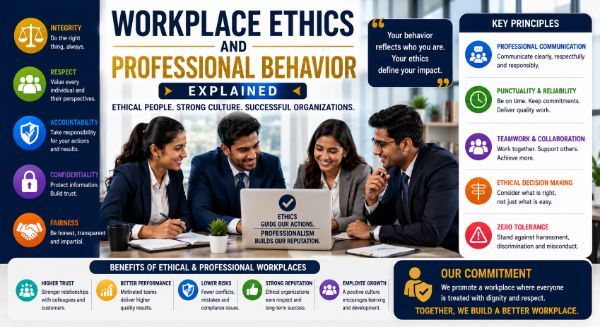
A successful organization is built not only on skills and productivity but also on ethical conduct and professional behavior. In today’s competitive and diverse work environment, employees are expected to demonstrate integrity, responsibility, respect, and accountability in their daily interactions. Workplace ethics and professional behavior help create a positive organizational culture, strengthen trust, and ensure long-term success for both individuals and businesses.
Understanding Workplace Ethics
Workplace ethics refer to the moral principles and values that guide employee behavior within an organization. These principles help individuals make responsible decisions and maintain honesty, fairness, and professionalism in their work.
Ethical behavior influences how employees interact with colleagues, customers, management, and stakeholders. Organizations that promote ethical standards often experience stronger trust, higher employee engagement, and better reputations.
Why Workplace Ethics Matter
Ethics form the foundation of a healthy workplace culture. Employees who act ethically contribute to an environment of trust, transparency, and mutual respect.
When organizations prioritize ethical practices, they reduce conflicts, improve decision-making, and build stronger relationships with customers and business partners. Ethical workplaces also attract and retain talented professionals.
What is Professional Behavior?
Professional behavior refers to the way employees conduct themselves in the workplace. It includes communication, appearance, attitude, responsibility, punctuality, and interactions with others.
Professional employees demonstrate respect, reliability, and commitment to organizational goals. Their behavior reflects positively on both themselves and their employers.
Honesty and Integrity in the Workplace
Honesty is one of the most important elements of workplace ethics. Employees should communicate truthfully, fulfill commitments, and take responsibility for their actions.
Integrity means doing the right thing even when no one is watching. Individuals with integrity build credibility and earn the trust of colleagues and leaders.
Respecting Colleagues and Diversity
Modern workplaces bring together people from different backgrounds, cultures, experiences, and perspectives. Respecting diversity is essential for creating inclusive and productive work environments.
Professional behavior involves treating everyone fairly, listening to different viewpoints, and avoiding discrimination or prejudice. Respectful workplaces encourage collaboration and innovation.
Accountability and Responsibility
Accountability means accepting responsibility for one’s actions and performance. Employees who take ownership of their work contribute to organizational success and demonstrate professionalism.
Being accountable includes meeting deadlines, following policies, admitting mistakes, and actively seeking solutions when challenges arise.
Effective Workplace Communication
Clear and respectful communication is a key component of professional behavior. Employees should communicate honestly, listen actively, and express ideas professionally.
Good communication reduces misunderstandings, improves teamwork, and strengthens workplace relationships. Professional communication also includes appropriate email etiquette, meeting conduct, and digital interactions.
Maintaining Confidentiality
Many workplaces handle sensitive information related to customers, employees, and business operations. Ethical employees understand the importance of confidentiality and protect information responsibly.
Maintaining confidentiality builds trust and ensures compliance with organizational policies and legal requirements.
Managing Conflicts Professionally
Disagreements and conflicts can occur in any workplace. Ethical and professional employees handle conflicts respectfully and focus on finding constructive solutions.
Professional conflict resolution involves active listening, open communication, and maintaining a calm and respectful attitude during discussions.
Time Management and Reliability
Professional behavior includes being punctual, organized, and dependable. Employees who manage time effectively demonstrate commitment to their responsibilities.
Reliability strengthens teamwork and ensures that projects and organizational goals are completed successfully.
Ethical Decision-Making
Employees often face situations that require ethical judgment. Ethical decision-making involves considering fairness, honesty, responsibility, and the impact of actions on others.
Organizations benefit when employees consistently make decisions that align with company values and ethical standards.
Leadership and Workplace Ethics
Leaders play a critical role in promoting workplace ethics and professionalism. They set examples through their actions, decisions, and communication.
Ethical leadership creates a culture of trust, accountability, and respect throughout the organization. Employees are more likely to follow ethical standards when leaders consistently demonstrate them.
Benefits of Ethical and Professional Workplaces
Organizations that prioritize workplace ethics and professional behavior often experience:
- Higher employee trust and engagement
- Improved teamwork and collaboration
- Stronger customer relationships
- Better decision-making
- Reduced workplace conflicts
- Enhanced organizational reputation
- Increased productivity and performance
These benefits contribute to long-term business growth and employee satisfaction.
Building a Culture of Ethics and Professionalism
Creating an ethical workplace requires commitment from both employees and leadership. Training programs, clear policies, and consistent reinforcement of organizational values help establish a strong ethical culture.
Employees should be encouraged to act responsibly, communicate openly, and support one another in maintaining professional standards.
Professional Success Starts with Ethics
Workplace ethics and professional behavior are essential skills for career growth and organizational success. They help individuals build trust, strengthen relationships, and create positive work environments.
By practicing honesty, accountability, respect, and professionalism, employees contribute to a culture of excellence and integrity. In every profession, ethical behavior is not just a requirement—it is a key driver of long-term success and professional credibility.