
- August 20, 2026
- Posted by: admin
- Category: Blog
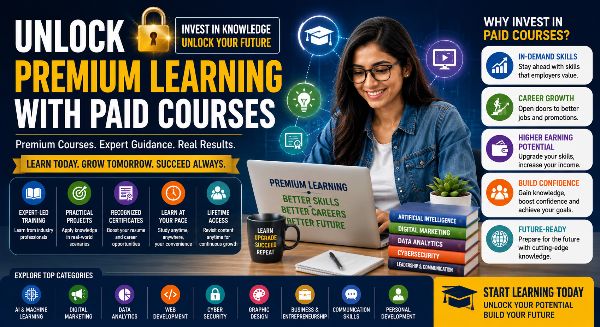
In today’s fast-changing professional world, learning new skills is one of the most valuable investments you can make. Free educational resources can provide useful information, but paid courses often offer a more structured and comprehensive learning experience designed to help learners achieve specific goals.
From Artificial Intelligence and digital marketing to communication, graphic design, data analytics, and entrepreneurship, premium online courses can provide practical knowledge that supports career development and personal growth.
What Is Premium Learning?
Premium learning refers to high-quality educational experiences that provide structured content, expert guidance, practical assignments, learning resources, and sometimes certifications or community support.
A well-designed paid course may include:
- Structured video lessons
- Expert-led training
- Practical assignments
- Real-world projects
- Downloadable resources
- Assessments and quizzes
- Certificates of completion
- Learner communities
- Ongoing course updates
The goal is to provide learners with a clear path from understanding concepts to applying them.
Why Choose Paid Courses?
The internet has made education widely accessible, but finding reliable and organized information can sometimes be challenging. Paid courses can save learners time by bringing relevant content together in one place.
1. Structured Learning
A quality paid course follows a planned curriculum. Lessons are arranged logically, allowing learners to progress from basic concepts to more advanced topics.
Instead of searching through hundreds of unrelated videos and articles, learners can follow a defined learning path.
2. Expert Guidance
Many premium courses are developed by experienced professionals or subject-matter experts.
Expert-led learning can help students:
- Understand complex topics
- Learn industry practices
- Avoid common mistakes
- Develop practical approaches
- Ask relevant questions
Before purchasing a course, it is always important to review the instructor’s background and experience.
3. Practical Skill Development
Premium learning should focus on more than theory. Practical exercises help learners understand how skills are used in real situations.
Useful course activities can include:
- Projects
- Case studies
- Assignments
- Simulations
- Portfolio work
- Practical assessments
Applying knowledge is an important step toward becoming job-ready.
Learn Valuable Digital Skills
Paid courses can provide structured training in many high-demand areas.
Artificial Intelligence
AI skills can help professionals improve productivity, research, content creation, automation, and business processes.
Digital Marketing
Learners can develop skills in:
- SEO
- Social media marketing
- Content marketing
- Online advertising
- Email marketing
- Analytics
Data Analytics
Data-related courses can introduce learners to:
- Excel
- Data visualization
- SQL
- Business analytics
- Dashboard creation
Cybersecurity
Cybersecurity courses can help learners understand:
- Online security
- Data protection
- Cyber threats
- Password management
- Phishing prevention
Graphic Design
Creative courses can teach:
- Visual design
- Branding
- Social media graphics
- Presentation design
- Digital content creation
Learn at Your Own Pace
One of the biggest advantages of online paid courses is flexibility.
Learners can often study:
- Before or after work
- During weekends
- From home
- While traveling
- According to their personal schedule
Many courses also allow students to pause and replay lessons, making it easier to review challenging topics.
Build Career-Ready Skills
A premium course can be especially useful when it is connected to a specific career objective.
For example, someone interested in digital marketing can learn SEO, advertising, content strategy, and analytics. Someone interested in technology can explore AI, programming, cybersecurity, or data analytics.
The important point is to select courses based on your career goals and skill gaps.
Earn Certificates
Many paid courses offer certificates after completion.
Certificates can be included on:
- Resumes
- LinkedIn profiles
- Professional portfolios
- Job applications
However, the certificate should be viewed as evidence of learning rather than a replacement for practical experience.
The strongest professional profile combines education + certifications + practical skills + experience.
Build a Professional Portfolio
Premium courses that include projects can help learners create work samples.
For example:
- A graphic design student can create branding materials.
- A digital marketer can develop a sample campaign.
- A web development student can build a website.
- A data learner can create a dashboard.
- An AI learner can develop an automation workflow.
A portfolio gives employers and clients tangible evidence of what you can do.
Improve Your Career Opportunities
Learning new skills can support several career goals, including:
- Getting your first job
- Finding a better job
- Preparing for a promotion
- Changing careers
- Starting freelancing
- Building a business
- Increasing professional confidence
While no course can guarantee a job or a particular salary, relevant training can strengthen your qualifications and improve your readiness for opportunities.
Paid Courses for Students
Students can use premium courses to complement their academic education.
Practical areas to explore include:
- AI fundamentals
- Digital literacy
- Coding
- Communication
- Digital marketing
- Financial literacy
- Entrepreneurship
Developing practical skills before graduation can help students become more prepared for the workplace.
Paid Courses for Professionals
Working professionals can use online courses to upgrade their existing expertise without taking a career break.
A professional might learn:
- AI productivity tools
- Data analytics
- Leadership
- Project management
- Digital marketing
- Communication
- Industry-specific technologies
Even a few hours of learning each week can contribute to long-term professional development.
Paid Courses for Entrepreneurs and Freelancers
Entrepreneurs and freelancers need a combination of technical and business skills.
Premium courses can help learners develop knowledge in:
- Branding
- Sales
- Digital marketing
- Customer management
- Business finance
- Website development
- Social media
- Productivity
Combining multiple complementary skills can create new income opportunities.
How to Choose the Right Paid Course
Before enrolling, evaluate the course carefully.
Check the Curriculum
Make sure the topics match your learning objectives.
Research the Instructor
Review the instructor’s qualifications, experience, and professional background.
Look for Practical Projects
Projects and assignments can make learning more useful and measurable.
Read Learner Reviews
Look for detailed feedback about the course content, teaching quality, and learning experience.
Check Course Updates
Technology changes quickly, so courses covering digital subjects should ideally be updated regularly.
Compare Price and Value
A higher price does not automatically mean higher quality. Consider the curriculum, instructor expertise, practical components, support, and overall value.
Make Premium Learning Worth the Investment
Simply purchasing a course is not enough. To get the maximum benefit:
- Set a clear learning goal.
- Create a regular study schedule.
- Complete lessons consistently.
- Take notes and practice.
- Finish assignments.
- Build real-world projects.
- Create a portfolio.
- Apply your new skills.
The real value of a paid course comes from learning, practicing, and applying the knowledge.
The Future of Premium Online Learning
Online education is becoming increasingly personalized and technology-driven. Artificial Intelligence, interactive learning tools, virtual classrooms, digital assessments, and practical projects are creating new possibilities for learners.
Premium courses can provide a focused environment where learners invest time and resources specifically toward their career and personal development goals.
Conclusion
Unlocking premium learning means investing in knowledge that can create long-term value. Paid courses can provide structured education, expert guidance, practical projects, flexible learning, and professional certifications.
However, the best course is not necessarily the most expensive one. Choose a program that matches your goals, provides genuine practical value, and helps you develop skills you can apply in the real world.