
- August 4, 2026
- Posted by: admin
- Category: Blog
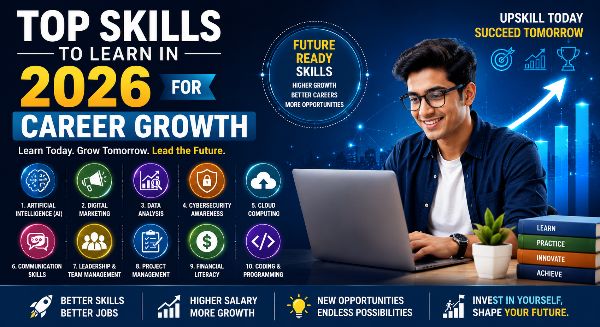
The workplace is evolving faster than ever. Advances in Artificial Intelligence (AI), automation, digital transformation, cloud computing, and remote work are reshaping industries and creating demand for new skills. Employers today are looking beyond traditional qualifications and placing greater emphasis on practical, future-ready abilities that improve productivity, innovation, and adaptability.
Whether you are a student, recent graduate, working professional, entrepreneur, or freelancer, learning the right skills in 2026 can significantly improve your career prospects. Investing in continuous learning not only increases employability but also prepares you for leadership roles and long-term success.
Why Learning New Skills Matters
Technology continues to transform the global job market. Many traditional roles are changing, while entirely new career opportunities are emerging.
Learning new skills helps you:
- Stay competitive in the job market
- Increase earning potential
- Improve productivity
- Adapt to technological changes
- Build career confidence
- Prepare for future leadership roles
- Explore freelancing and entrepreneurship opportunities
Continuous learning has become one of the most valuable career investments.
1. Artificial Intelligence (AI) Skills
Artificial Intelligence is transforming every industry, from healthcare and education to finance and marketing.
Important AI skills include:
- Prompt engineering
- AI-powered content creation
- AI research tools
- Workflow automation
- AI productivity applications
- Responsible AI usage
Professionals who understand AI can work more efficiently and create greater value for employers.
2. Digital Marketing
Businesses increasingly rely on digital platforms to reach customers.
Essential digital marketing skills include:
- Search Engine Optimization (SEO)
- Social Media Marketing
- Google Ads
- Email Marketing
- Content Marketing
- Analytics
- Brand Strategy
Digital marketing professionals are in demand across businesses of all sizes.
3. Data Analysis
Organizations make important decisions based on data.
Learning data analysis helps you:
- Interpret business trends
- Create reports
- Build dashboards
- Analyze customer behavior
- Support strategic planning
Basic knowledge of spreadsheets, visualization tools, and business analytics is valuable in almost every profession.
4. Cybersecurity Awareness
As cyber threats increase, cybersecurity skills have become essential for every employee—not just IT professionals.
Key areas include:
- Password security
- Phishing awareness
- Data protection
- Secure online practices
- Privacy management
- Digital risk awareness
Cybersecurity knowledge protects both personal and organizational information.
5. Cloud Computing
Cloud technology powers modern businesses.
Popular cloud skills include:
- Cloud storage
- Collaboration platforms
- Cloud infrastructure basics
- Remote file management
- Cloud security
Cloud computing supports flexible work environments and digital transformation.
6. Communication Skills
Strong communication remains one of the most valuable professional skills.
Develop abilities in:
- Public speaking
- Business writing
- Email communication
- Presentation skills
- Active listening
- Virtual meeting etiquette
Effective communication improves teamwork and leadership potential.
7. Problem-Solving and Critical Thinking
Employers value professionals who can solve challenges independently.
Improve your ability to:
- Analyze situations
- Evaluate solutions
- Make informed decisions
- Think creatively
- Manage complex tasks
Critical thinking supports innovation and business growth.
8. Leadership and Team Management
Leadership is important at every stage of a career.
Key leadership skills include:
- Decision-making
- Delegation
- Team motivation
- Conflict resolution
- Coaching and mentoring
- Strategic thinking
Strong leaders inspire collaboration and organizational success.
9. Project Management
Every organization needs professionals who can successfully manage projects.
Useful project management skills include:
- Planning
- Scheduling
- Resource management
- Budget tracking
- Risk management
- Team coordination
Knowledge of Agile and Scrum methodologies is an added advantage.
10. Financial Literacy
Understanding finance supports both personal and professional success.
Important topics include:
- Budgeting
- Saving
- Investing
- Tax planning
- Business finance
- Financial decision-making
Financial literacy helps individuals make smarter career and business decisions.
11. Coding and Programming Basics
Programming is no longer limited to software developers.
Learning basic coding improves:
- Logical thinking
- Automation
- Technical understanding
- Problem-solving
Popular programming languages include:
- Python
- JavaScript
- SQL
- Java
Basic coding skills are increasingly valuable across industries.
12. Graphic Design and Content Creation
Businesses require engaging visual content for branding and marketing.
Useful creative skills include:
- Graphic design
- Video editing
- Presentation design
- Social media content
- Infographics
- AI-assisted design
Creative professionals are highly valued in the digital economy.
13. Emotional Intelligence (EQ)
Technical expertise alone is not enough.
Emotional Intelligence helps professionals:
- Build stronger relationships
- Manage stress
- Handle workplace conflicts
- Improve teamwork
- Develop leadership qualities
High emotional intelligence contributes to long-term career success.
14. Time Management and Productivity
Professionals who manage their time effectively accomplish more with less stress.
Useful productivity skills include:
- Task prioritization
- Goal setting
- Calendar management
- Digital productivity tools
- Focus techniques
Good time management improves work-life balance.
15. Adaptability and Lifelong Learning
The ability to learn continuously is perhaps the most valuable skill for the future.
Successful professionals:
- Stay curious
- Learn emerging technologies
- Upgrade existing skills
- Accept change positively
- Explore new opportunities
Adaptability ensures long-term career resilience.
Industries Creating High Demand for Skilled Professionals
Future-ready skills are in demand across many sectors, including:
- Information Technology
- Artificial Intelligence
- Healthcare
- Education
- Digital Marketing
- Finance
- Manufacturing
- E-commerce
- Media and Communications
- Government Services
Professionals who combine technical expertise with strong interpersonal skills are especially valuable.
Benefits of Learning Future Skills
Developing modern skills offers several advantages:
- Better job opportunities
- Higher salaries
- Career advancement
- Increased confidence
- Greater productivity
- Stronger professional reputation
- Entrepreneurial opportunities
- Global employability
Continuous learning keeps your career relevant in a rapidly changing world.
Conclusion
The future belongs to individuals who are willing to learn, adapt, and innovate. As industries continue to embrace digital transformation, professionals with skills in Artificial Intelligence, cybersecurity, digital marketing, communication, leadership, and data analysis will remain highly sought after.
Whether you are beginning your career or planning your next promotion, investing in future-ready skills today will help you achieve long-term professional success. The best time to start learning is now, because the skills you develop in 2026 will shape the opportunities you receive in the years ahead.