
- July 30, 2026
- Posted by: admin
- Category: Blog
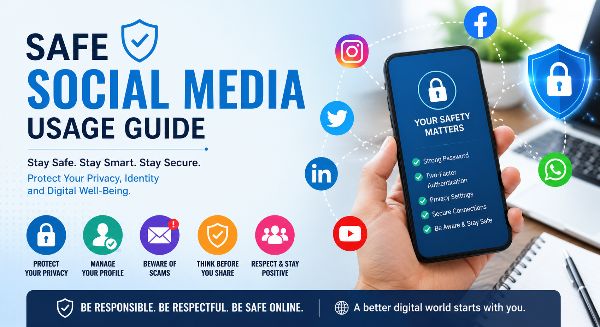
n today’s connected world, social media has become an essential part of everyday life. Platforms like Facebook, Instagram, X (formerly Twitter), LinkedIn, YouTube, and WhatsApp help us stay connected, share experiences, and access information instantly. However, while social media offers numerous benefits, it also comes with risks such as cybercrime, identity theft, misinformation, online scams, and privacy breaches.
Following safe social media practices can help protect your personal information, maintain your digital reputation, and ensure a positive online experience. This guide explains practical steps you can take to stay safe while using social media.
Why Safe Social Media Usage Matters
Every post, photo, comment, or personal detail shared online contributes to your digital footprint. Cybercriminals often exploit publicly available information for phishing attacks, identity theft, financial fraud, and account hacking.
Using social media responsibly helps you:
- Protect your personal information
- Prevent unauthorized access to your accounts
- Avoid online scams and fraud
- Safeguard your reputation
- Create a healthy and positive online environment
1. Use Strong and Unique Passwords
A strong password is your first line of defense against hackers. Avoid using common passwords, birthdays, or names.
Best Practices:
- Use at least 12–16 characters.
- Combine uppercase letters, lowercase letters, numbers, and special symbols.
- Use different passwords for different accounts.
- Consider using a trusted password manager.
2. Enable Two-Factor Authentication (2FA)
Two-factor authentication adds an extra layer of security by requiring a verification code in addition to your password.
Benefits include:
- Better account protection
- Reduced risk of unauthorized access
- Improved security against password theft
3. Protect Your Personal Information
Avoid sharing sensitive information such as:
- Home address
- Phone number (unless necessary)
- Financial details
- Government-issued identification numbers
- Travel plans in real time
- Children’s personal information
The less personal information available publicly, the lower the risk of identity theft.
4. Review Privacy Settings Regularly
Most social media platforms allow you to control who can:
- View your profile
- See your posts
- Send friend requests
- Tag you in photos
- Find you through searches
Review and update your privacy settings periodically to ensure they align with your preferences.
5. Think Before You Post
Once content is published online, it can be difficult—or impossible—to remove completely.
Before posting, ask yourself:
- Is this information appropriate to share?
- Could it affect my personal or professional reputation?
- Am I revealing sensitive details?
Posting responsibly helps build a positive digital presence.
6. Beware of Phishing and Online Scams
Cybercriminals often use fake messages, emails, or social media profiles to trick users into revealing passwords or financial information.
Warning signs include:
- Urgent requests for personal information
- Suspicious links
- Unexpected prize notifications
- Fake investment opportunities
- Requests for money from unfamiliar accounts
Always verify the sender before clicking links or sharing information.
7. Verify Information Before Sharing
False information spreads quickly online.
Before sharing news or viral content:
- Check the original source.
- Read the full article, not just the headline.
- Compare information from multiple trusted sources.
- Avoid forwarding unverified messages.
Responsible sharing helps reduce misinformation.
8. Be Cautious When Accepting Friend Requests
Not everyone online is who they claim to be.
Only accept requests from people you know or can verify. Fake profiles are commonly used for scams, phishing, and identity theft.
9. Avoid Using Public Wi-Fi for Sensitive Activities
Public Wi-Fi networks can expose your personal information to attackers.
Avoid logging into banking apps, payment platforms, or important accounts while connected to unsecured public networks. If necessary, use a trusted Virtual Private Network (VPN).
10. Monitor Your Account Activity
Regularly review:
- Login history
- Connected devices
- Active sessions
- Security alerts
If you notice suspicious activity, change your password immediately and report the issue to the platform.
11. Report and Block Abusive Users
If you experience:
- Cyberbullying
- Harassment
- Fake profiles
- Spam
- Hate speech
- Fraudulent activity
Use the platform’s reporting and blocking tools to protect yourself and others.
12. Maintain Digital Well-Being
Healthy social media use is about more than security.
Consider these habits:
- Limit daily screen time.
- Take regular breaks from social media.
- Follow positive and informative accounts.
- Avoid engaging in online arguments.
- Balance online activities with offline relationships and hobbies.
Maintaining digital well-being supports both mental and emotional health.
Tips for Parents
Parents can help children use social media safely by:
- Discussing online safety openly.
- Setting appropriate privacy settings.
- Monitoring age-appropriate platform use.
- Encouraging respectful online behavior.
- Teaching children not to share personal information with strangers.
Conclusion
Social media is a powerful tool for communication, learning, and networking when used responsibly. By following good security practices, protecting your personal information, and thinking carefully before sharing content, you can enjoy the benefits of social media while minimizing potential risks.
Remember that online safety is an ongoing process. Stay informed about new threats, regularly review your account settings, and adopt secure habits to create a safer and more positive digital experience.