
- August 1, 2026
- Posted by: admin
- Category: Blog
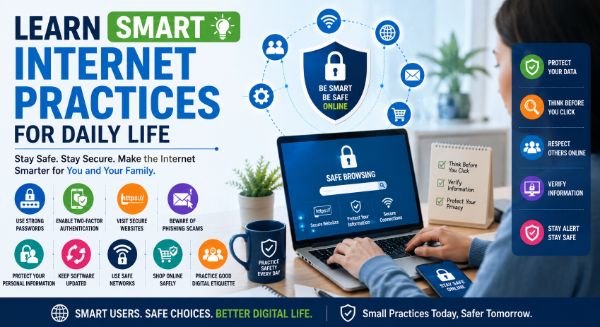
The internet has become an essential part of our everyday lives. From paying bills and shopping online to attending virtual classes, working remotely, communicating with friends, and accessing government services, almost every activity now involves the internet. While digital technology offers incredible convenience, it also comes with risks such as cybercrime, phishing attacks, identity theft, online scams, and data breaches.
Learning smart internet practices helps individuals use digital technology safely, responsibly, and confidently. By adopting simple yet effective online habits, you can protect your personal information, financial data, and digital identity while making the most of the internet.
Why Smart Internet Practices Matter
Every day, millions of people share personal information online. Without proper precautions, cybercriminals can exploit this information to commit fraud, steal identities, or gain unauthorized access to accounts.
Following smart internet practices helps you:
- Protect your personal information
- Prevent cyber threats
- Secure online transactions
- Safeguard your digital identity
- Improve online privacy
- Build confidence in using digital services
Good online habits reduce risks and create a safer internet experience.
Create Strong Passwords
Passwords are your first line of defense against cyberattacks.
Best practices include:
- Use at least 12–16 characters.
- Combine uppercase and lowercase letters.
- Include numbers and special symbols.
- Avoid using birthdays or personal names.
- Use a different password for each account.
- Update passwords regularly.
Using a password manager can make password management easier and more secure.
Enable Two-Factor Authentication (2FA)
Two-Factor Authentication provides an additional layer of security.
Benefits include:
- Better account protection
- Reduced risk of unauthorized access
- Enhanced online security
Even if someone discovers your password, 2FA helps keep your account secure.
Browse Secure Websites
Always verify that the websites you visit are secure.
Look for:
- HTTPS in the web address
- A padlock icon in the browser
- Trusted domain names
Avoid entering personal or financial information on unsecured websites.
Recognize Phishing Scams
Phishing attacks are designed to steal sensitive information through fake emails, messages, or websites.
Warning signs include:
- Urgent requests for personal information
- Unexpected links or attachments
- Poor spelling and grammar
- Fake customer support messages
- Suspicious website addresses
Always verify the source before clicking any links or downloading files.
Protect Your Personal Information
Be careful about what you share online.
Avoid publicly posting:
- Home address
- Phone number
- Banking information
- Government identification numbers
- Travel plans
- Confidential work information
Sharing less personal information reduces the risk of identity theft.
Keep Software Updated
Software updates often include important security patches.
Regularly update:
- Operating systems
- Web browsers
- Mobile apps
- Antivirus software
- Smart devices
Automatic updates provide better protection against emerging cyber threats.
Use Public Wi-Fi Carefully
Public Wi-Fi networks can be less secure than private connections.
When using public Wi-Fi:
- Avoid online banking.
- Do not access confidential business information.
- Use a trusted Virtual Private Network (VPN).
- Log out of important accounts after use.
Extra caution helps protect your data from unauthorized access.
Shop Online Safely
Online shopping is convenient, but it’s important to stay alert.
Smart shopping habits include:
- Buy only from trusted websites.
- Check customer reviews.
- Verify secure payment options.
- Avoid deals that seem too good to be true.
- Monitor your bank statements regularly.
Secure shopping reduces the risk of financial fraud.
Practice Safe Social Media Usage
Social media platforms are valuable for communication but can expose personal information if used carelessly.
Safe practices include:
- Review privacy settings regularly.
- Accept requests only from people you know.
- Avoid oversharing personal information.
- Think carefully before posting.
- Report fake or suspicious accounts.
Responsible social media use protects your privacy and reputation.
Verify Information Before Sharing
False information spreads quickly online.
Before sharing news or messages:
- Read the complete article.
- Verify the source.
- Compare information from trusted websites.
- Check publication dates.
Sharing accurate information helps create a more reliable online environment.
Backup Important Data
Unexpected cyber incidents or hardware failures can result in data loss.
Maintain regular backups using:
- Cloud storage
- External hard drives
- Secure backup services
The 3-2-1 backup strategy is a reliable way to protect important files.
Learn Basic Cybersecurity
Understanding basic cybersecurity principles helps you stay protected online.
Important topics include:
- Password security
- Cyber hygiene
- Safe browsing
- Malware prevention
- Email security
- Digital privacy
- Secure online payments
Continuous learning improves your ability to recognize and avoid cyber threats.
Teach Children Safe Internet Habits
Children are frequent internet users and should learn safe online behavior from an early age.
Parents should encourage children to:
- Protect personal information.
- Avoid talking to strangers online.
- Report suspicious messages.
- Use age-appropriate websites.
- Limit screen time.
Digital awareness prepares children for responsible internet use.
Maintain Good Digital Etiquette
Being respectful online is just as important as staying secure.
Practice digital etiquette by:
- Communicating politely.
- Respecting others’ privacy.
- Avoiding cyberbullying.
- Giving credit to original creators.
- Following community guidelines.
Positive online behavior creates healthier digital communities.
Benefits of Smart Internet Practices
Developing smart internet habits offers many advantages:
- Better online security
- Greater privacy
- Reduced risk of cybercrime
- Safe financial transactions
- Increased digital confidence
- Responsible technology use
- Protection against identity theft
- Peace of mind
Smart internet practices improve both personal and professional digital experiences.
Conclusion
The internet has transformed how we work, learn, communicate, and manage our daily lives. However, using it wisely requires awareness, responsibility, and good cybersecurity habits. By creating strong passwords, enabling two-factor authentication, protecting personal information, recognizing phishing attempts, verifying online content, and practicing responsible social media use, you can enjoy the benefits of the digital world while minimizing risks.
Smart internet practices are not difficult to adopt, but they make a significant difference in protecting your privacy, finances, and digital identity. Developing these habits today will help you stay safe, informed, and confident in an increasingly connected world.