- September 8, 2026
- Posted by: admin
- Category: Blog
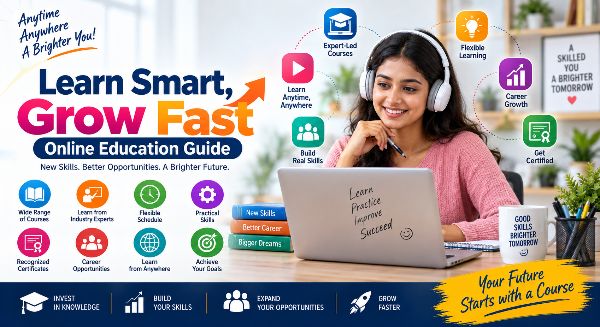
Education is no longer limited to traditional classrooms. With the growth of digital technology, learners can now access professional courses, expert guidance, and practical training from almost anywhere. Online education has become a flexible way for students, working professionals, entrepreneurs, and career changers to develop valuable skills while managing their existing responsibilities.
Whether you want to learn digital marketing, communication, programming, beauty and wellness, baking, business management, or another professional skill, choosing the right online course can help you move closer to your career goals.
What is Online Education?
Online education is a learning system in which courses, lessons, assignments, assessments, and other educational resources are delivered through digital platforms.
Depending on the course, learners may have access to:
- Video lessons
- Live online classes
- Downloadable study materials
- Practical assignments
- Quizzes and assessments
- Instructor support
- Discussion forums
- Certificates of completion
This approach allows learners to study at their own pace while gaining skills relevant to their personal or professional goals.
Why Choose Online Learning?
Online education offers flexibility that traditional learning may not always provide.
Some major advantages include:
- Learn from home
- Flexible study schedules
- Access to diverse subjects
- Convenient learning resources
- Opportunity to learn alongside a job
- Self-paced education
- Development of practical skills
- Access to instructors and industry knowledge
For busy learners, flexibility can make skill development much easier.
Identify Your Learning Goals
Before purchasing or subscribing to a course, identify exactly what you want to achieve.
Ask yourself:
- What skill do I want to learn?
- Why do I want to learn it?
- Is it connected to my career?
- Do I want a job, promotion, or business opportunity?
- How much time can I dedicate to learning?
- What level of knowledge do I already have?
Clear goals make it easier to select the right course.
Choose Skill-Based Courses
One of the most effective approaches to online learning is focusing on practical, skill-based education.
Popular areas include:
- Digital marketing
- Search engine optimization
- Social media marketing
- Website development
- Graphic design
- Data analytics
- Artificial intelligence
- Business communication
- English speaking
- Entrepreneurship
- Beauty and wellness
- Bakery and confectionery
Choose skills that match your interests while also considering their relevance to your desired career or business.
Check the Course Curriculum
A course curriculum should clearly explain what you will learn.
Before enrolling, look for:
- Well-organized modules
- Beginner-to-advanced progression
- Practical assignments
- Real-world examples
- Updated content
- Assessments
- Projects or case studies
A detailed curriculum helps you understand whether the course matches your expectations.
Look for Expert-Led Training
The quality of instruction can significantly influence your learning experience.
When evaluating a course, consider the instructor’s:
- Professional experience
- Industry knowledge
- Teaching approach
- Credentials
- Student feedback
Expert-led courses can provide practical insights that go beyond theoretical information.
Learn at Your Own Pace
One of the biggest advantages of online education is flexibility.
You can create a learning schedule that fits your lifestyle. For example, working professionals may study in the evening, while students may dedicate weekends to professional courses.
However, flexibility requires discipline. Setting regular study times can help you maintain consistency.
Focus on Practical Learning
Watching videos alone is not enough to master a skill. Practice is essential.
For better results:
- Complete lessons regularly.
- Take notes.
- Practice each new concept.
- Complete assignments.
- Work on real-world projects.
- Review mistakes.
- Apply your knowledge outside the course.
The goal should be to turn knowledge into usable skills.
Build a Learning Routine
A consistent routine can make online learning more effective.
Consider setting aside a specific amount of time each day for:
- Watching lessons
- Reading course materials
- Completing assignments
- Practicing skills
- Reviewing previous topics
Even short, regular learning sessions can produce meaningful progress over time.
Use Technology Effectively
A reliable digital setup can improve your learning experience.
Make sure you have:
- A reliable internet connection
- A suitable computer or smartphone
- Headphones when necessary
- Updated software
- A comfortable study environment
Organizing digital files and course materials also makes revision easier.
Certificates and Career Development
Some online courses provide certificates after successful completion. While a certificate can demonstrate that you completed a course, practical ability remains extremely important.
For career development, combine your certificate with:
- A professional portfolio
- Practical projects
- Relevant experience
- Strong communication skills
- Industry knowledge
Employers and clients value demonstrated skills and the ability to apply knowledge effectively.
How Online Learning Can Support Career Growth
Online education can help professionals prepare for new responsibilities and career opportunities.
It can support:
- Skill upgrades
- Career transitions
- Professional specialization
- Entrepreneurship
- Freelancing
- Workplace performance
- Continuing education
Learning new skills can help individuals remain adaptable as industries and technologies change.
Online Education for Entrepreneurs
Business owners and aspiring entrepreneurs can also benefit from online courses.
Useful subjects include:
- Digital marketing
- Business planning
- Financial management
- Customer service
- Branding
- Social media
- Website development
- Sales
Learning these skills can help entrepreneurs make better business decisions and reduce dependence on outside support for basic tasks.
Avoid Common Online Learning Mistakes
Learners sometimes enroll in multiple courses without completing any of them.
Avoid this by:
- Choosing courses carefully
- Setting realistic goals
- Following a schedule
- Completing one course before starting too many others
- Practicing regularly
- Reviewing what you learn
Consistency is more valuable than collecting dozens of unfinished courses.
How to Choose the Right Online Course
Before enrolling, consider these factors:
1. Course Relevance
Does the course support your career or personal goals?
2. Curriculum
Does it cover the skills you actually need?
3. Instructor Expertise
Does the instructor have relevant knowledge and experience?
4. Learning Format
Do you prefer self-paced lessons, live classes, or a combination?
5. Practical Training
Does the course include assignments, projects, or real-world applications?
6. Support
Is there access to instructors, mentors, or learning communities?
7. Cost
Does the course provide sufficient value for its price?
Taking time to compare these factors can help you make a better learning investment.
The Future of Online Education
Online education is continuing to evolve through technologies such as artificial intelligence, interactive learning platforms, virtual classrooms, personalized learning systems, and digital assessments.
These developments can make education more accessible and personalized. However, technology should support learning rather than replace active participation. Learners still need curiosity, discipline, critical thinking, and consistent practice.
Learn Smart, Grow Fast
Successful online learning is not about completing as many courses as possible. It is about choosing the right course, learning consistently, practicing what you learn, and applying those skills in real situations.
A smart learning strategy begins with a clear goal, continues with quality education and regular practice, and ends with measurable improvement. Whether you are preparing for a new career, upgrading your professional skills, or exploring entrepreneurship, online education can provide a flexible pathway toward your goals.
The best time to start learning is when you have a clear reason to grow. Choose your course wisely, stay consistent, practice continuously, and turn your knowledge into skills that create real opportunities.