
- May 1, 2026
- Posted by: admin
- Category: Blog
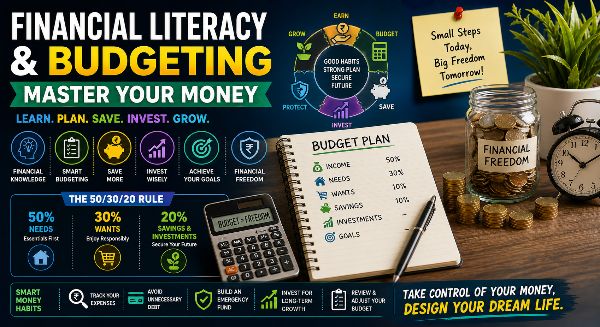
In today’s fast-paced world, managing money effectively is no longer optional—it is a necessity. Financial literacy and budgeting are essential life skills that empower individuals to make informed decisions, control expenses, and build long-term wealth. Whether you are a student, professional, or entrepreneur, understanding how money works is the first step toward financial independence and stability.
Understanding Financial Literacy
Financial literacy refers to the ability to understand and manage various financial aspects such as income, expenses, savings, investments, and debt. It involves knowing how to make smart financial decisions that align with your goals.
A financially literate individual can plan for the future, avoid unnecessary debt, and make better use of available resources. This knowledge helps in achieving both short-term needs and long-term financial security.
Importance of Budgeting
Budgeting is the foundation of financial management. It is the process of planning how to allocate income across different expenses, savings, and investments.
A well-structured budget helps track spending, prevent overspending, and ensure that money is used efficiently. It provides clarity on where your money is going and helps identify areas where you can cut costs.
Creating an Effective Budget
The first step in budgeting is understanding your income and expenses. List all sources of income and categorize your expenses into essential and non-essential items.
A popular method is the 50-30-20 rule, where 50% of income is allocated to needs, 30% to wants, and 20% to savings and investments. This approach helps maintain a balanced financial plan.
Managing Expenses Wisely
Controlling expenses is crucial for financial stability. Tracking daily spending habits helps identify unnecessary expenses and areas where savings can be made.
Simple changes, such as reducing impulsive purchases and comparing prices before buying, can have a significant impact over time. Smart spending ensures that money is used effectively.
Building a Savings Habit
Saving money is a key component of financial success. It provides a safety net for emergencies and helps achieve future goals such as education, travel, or home ownership.
Setting aside a fixed percentage of income regularly builds a strong financial foundation. Even small, consistent savings can grow significantly over time.
Understanding Investments
Investing is essential for growing wealth and beating inflation. Financial literacy includes understanding different investment options such as stocks, mutual funds, and fixed deposits.
Making informed investment decisions helps generate additional income and secure long-term financial goals. It is important to assess risk and choose investments that match your financial objectives.
Managing Debt Effectively
Debt can be useful if managed properly but can become a burden if not controlled. Understanding interest rates, repayment terms, and borrowing limits is crucial.
Prioritizing high-interest debts and avoiding unnecessary loans helps maintain financial health. Responsible borrowing ensures that debt does not hinder financial growth.
Setting Financial Goals
Clear financial goals provide direction and motivation. These goals can be short-term, such as saving for a gadget, or long-term, such as retirement planning.
Having defined goals helps in creating a focused budget and encourages disciplined financial behavior.
Leveraging Digital Tools
Technology has made financial management easier than ever. Budgeting apps, expense trackers, and online banking tools help monitor finances in real time.
These tools provide insights into spending patterns and help in making informed decisions quickly and efficiently.
Achieving Financial Freedom
Financial literacy and budgeting are not just about managing money—they are about gaining control over your life. When you understand your finances, you can make confident decisions, reduce stress, and work toward financial freedom.
Mastering money requires discipline, consistency, and continuous learning. By adopting smart financial habits, anyone can build a secure and prosperous future.