
- May 6, 2026
- Posted by: admin
- Category: Blog
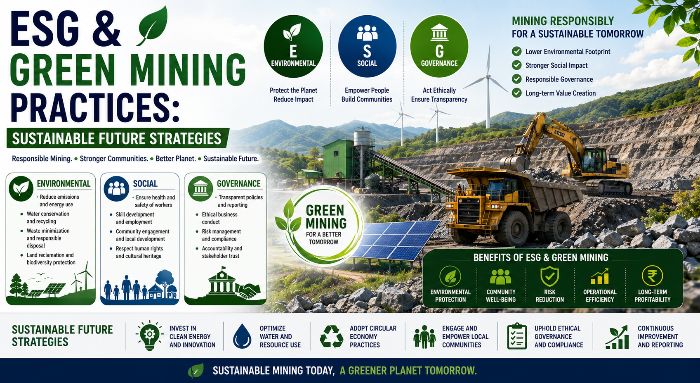
As industries worldwide move toward sustainability, the mining sector is undergoing a significant transformation. Environmental, Social, and Governance (ESG) principles are becoming central to mining operations, driving companies to adopt greener, safer, and more responsible practices. Green mining is no longer just an environmental initiative—it is a strategic approach to ensuring long-term business success while protecting natural resources and supporting communities.
Understanding ESG in Mining
ESG stands for Environmental, Social, and Governance, a framework used to evaluate how companies manage sustainability and ethical responsibilities.
In the mining industry, ESG focuses on reducing environmental impact, ensuring worker and community welfare, and maintaining transparent governance practices. Companies that prioritize ESG are better positioned to attract investors, comply with regulations, and build public trust.
The Need for Green Mining Practices
Traditional mining methods often lead to environmental challenges such as deforestation, water pollution, carbon emissions, and land degradation. As awareness of climate change grows, there is increasing pressure on mining companies to adopt sustainable practices.
Green mining aims to minimize environmental damage while improving operational efficiency. It focuses on responsible resource extraction, waste reduction, and energy conservation.
Reducing Environmental Impact
One of the key goals of green mining is reducing the industry’s environmental footprint. Companies are investing in renewable energy sources such as solar and wind power to reduce dependence on fossil fuels.
Advanced technologies are also being used to improve energy efficiency, manage waste responsibly, and reduce water consumption. Sustainable land restoration and biodiversity conservation efforts further help protect ecosystems.
Water and Waste Management
Mining operations require large amounts of water and generate significant waste. Effective water management strategies help reduce consumption and prevent contamination of nearby water sources.
Waste management practices such as recycling, tailings management, and responsible disposal reduce environmental risks. Many companies are adopting circular economy principles to reuse materials and minimize waste generation.
Social Responsibility and Community Development
The social aspect of ESG focuses on the well-being of workers and local communities. Mining companies are increasingly investing in healthcare, education, skill development, and infrastructure projects in surrounding areas.
Creating employment opportunities and maintaining safe working conditions are also essential components of responsible mining. Strong community engagement helps build trust and ensures that mining activities contribute positively to local development.
Governance and Ethical Practices
Good governance is essential for sustainable mining operations. Transparent policies, ethical decision-making, and regulatory compliance help maintain accountability.
Companies with strong governance frameworks are better equipped to manage risks, prevent corruption, and maintain investor confidence. ESG reporting and sustainability audits are becoming standard practices in the industry.
Role of Technology in Sustainable Mining
Technology is playing a major role in advancing green mining practices. Automation, artificial intelligence, and data analytics help optimize operations and improve resource efficiency.
Smart monitoring systems track environmental impact in real time, enabling companies to make informed decisions and maintain compliance with sustainability standards.
Economic Benefits of ESG Adoption
Adopting ESG practices is not only beneficial for the environment but also for business performance. Sustainable operations often lead to lower energy costs, improved efficiency, and stronger investor interest.
Consumers and investors increasingly prefer companies with strong sustainability commitments. ESG-focused mining companies are therefore gaining a competitive advantage in global markets.
Challenges in Implementing Green Mining
Despite the benefits, transitioning to sustainable mining can be challenging. High implementation costs, technological limitations, and regulatory complexities may slow adoption.
However, long-term benefits outweigh the initial challenges. Collaboration between governments, industries, and communities is essential for successful implementation.
Building a Sustainable Future
The future of mining lies in balancing economic growth with environmental and social responsibility. ESG and green mining practices provide a roadmap for achieving this balance.
By embracing sustainability, mining companies can reduce environmental impact, improve community relations, and ensure long-term profitability. Green mining is not just a trend—it is the foundation of a more responsible and sustainable future for the industry.