
- June 10, 2026
- Posted by: admin
- Category: Blog
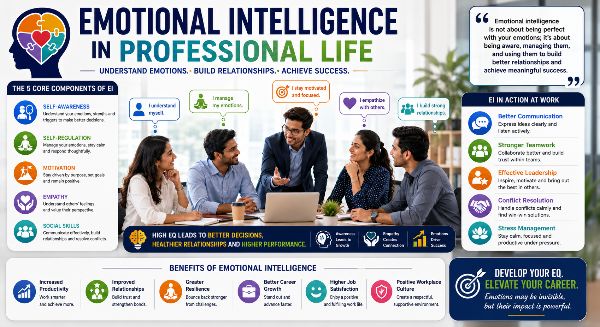
In today’s workplace, technical skills and professional qualifications are important, but they are no longer the only factors that determine success. Emotional Intelligence (EI), often referred to as Emotional Quotient (EQ), has become a critical skill for building strong relationships, improving communication, managing stress, and achieving career growth. Professionals with high emotional intelligence are better equipped to handle workplace challenges, collaborate effectively, and lead teams successfully.
What is Emotional Intelligence?
Emotional Intelligence is the ability to recognize, understand, manage, and influence emotions—both your own and those of others. It involves being aware of feelings, controlling emotional reactions, and responding thoughtfully in different situations.
Unlike technical skills, emotional intelligence focuses on interpersonal abilities that help individuals navigate workplace relationships and professional environments effectively.
Why Emotional Intelligence Matters at Work
Workplaces are built on interactions between people. Employees communicate with colleagues, clients, managers, and stakeholders daily. Emotional intelligence helps professionals manage these interactions positively and productively.
Individuals with strong emotional intelligence often build stronger relationships, handle conflicts better, and adapt more effectively to workplace changes.
The Core Components of Emotional Intelligence
Emotional intelligence consists of several key elements that contribute to professional success.
Self-Awareness
Self-awareness is the ability to recognize and understand your own emotions. It helps individuals identify strengths, weaknesses, and emotional triggers.
Professionals who are self-aware can make better decisions and respond more thoughtfully to workplace situations.
Self-Regulation
Self-regulation refers to managing emotions in a constructive manner. It involves staying calm under pressure, controlling impulsive reactions, and maintaining professionalism during challenging situations.
Employees who practice self-regulation are often seen as reliable and dependable team members.
Motivation
Emotionally intelligent individuals are often driven by personal growth, achievement, and continuous improvement rather than external rewards alone.
Strong internal motivation helps professionals stay focused on goals and maintain resilience during setbacks.
Empathy
Empathy is the ability to understand and appreciate the feelings and perspectives of others. It plays a vital role in teamwork, leadership, and customer relationships.
Empathetic professionals create supportive work environments and build stronger connections with colleagues and clients.
Social Skills
Social skills involve communicating effectively, building relationships, resolving conflicts, and collaborating with others.
Professionals with strong social skills are often better at networking, teamwork, and leadership responsibilities.
Emotional Intelligence and Workplace Communication
Communication is one of the most important aspects of professional life. Emotional intelligence helps individuals communicate clearly, listen actively, and respond appropriately to different situations.
Employees with strong emotional intelligence can manage difficult conversations more effectively and maintain positive workplace relationships.
Managing Workplace Stress
Work-related stress is common in modern organizations. Emotional intelligence helps professionals recognize stress triggers and manage their emotional responses effectively.
By maintaining emotional balance, individuals can remain productive, focused, and calm even during high-pressure situations.
Building Strong Team Relationships
Successful teams rely on trust, understanding, and cooperation. Emotional intelligence improves teamwork by encouraging empathy, respect, and open communication.
Employees who understand and value the perspectives of others contribute to a more collaborative and supportive work environment.
Conflict Resolution Through Emotional Intelligence
Disagreements are a natural part of workplace interactions. Emotional intelligence helps individuals approach conflicts with patience and understanding rather than reacting emotionally.
Professionals who manage conflicts constructively can maintain positive relationships while finding effective solutions to problems.
Leadership and Emotional Intelligence
Great leaders are often distinguished by their emotional intelligence rather than their technical expertise alone. Leaders with high EQ inspire trust, motivate teams, and create positive workplace cultures.
They understand employee concerns, communicate effectively, and guide teams through challenges with confidence and empathy.
Emotional Intelligence in Customer Service
For professionals who interact with customers, emotional intelligence is essential. Understanding customer emotions and responding with empathy improves customer satisfaction and loyalty.
Emotionally intelligent customer interactions help build trust and strengthen business relationships.
Developing Emotional Intelligence
Emotional intelligence is not a fixed trait—it can be developed through practice and self-improvement.
Some ways to strengthen emotional intelligence include:
- Practicing self-reflection
- Improving active listening skills
- Managing stress effectively
- Seeking constructive feedback
- Developing empathy
- Enhancing communication skills
- Practicing mindfulness and emotional awareness
Continuous development helps professionals strengthen their interpersonal effectiveness over time.
Benefits of Emotional Intelligence in Professional Life
Professionals with strong emotional intelligence often experience:
- Better communication skills
- Improved teamwork and collaboration
- Stronger leadership abilities
- Reduced workplace stress
- Better conflict resolution
- Increased job satisfaction
- Enhanced career growth opportunities
These advantages contribute to both personal success and organizational performance.
Emotional Intelligence as a Career Advantage
In today’s rapidly changing workplace, emotional intelligence has become a valuable competitive advantage. Organizations increasingly seek employees who can work well with others, manage challenges effectively, and contribute positively to workplace culture.
By developing emotional intelligence, professionals can strengthen relationships, improve performance, and unlock greater career opportunities. Success in professional life is not just about what you know—it is also about how well you understand and manage emotions in yourself and others.