- July 21, 2026
- Posted by: admin
- Category: Blog
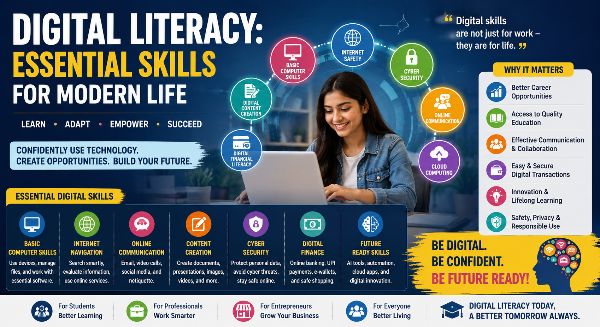
In today’s technology-driven world, digital literacy has become as important as reading and writing. From education and employment to banking, healthcare, communication, and government services, digital technology is integrated into almost every aspect of daily life. Whether you are a student, working professional, entrepreneur, or senior citizen, possessing strong digital literacy skills is essential for personal growth, career success, and active participation in the digital economy.
Digital literacy is not just about using computers or smartphones—it is about understanding how to access, evaluate, create, communicate, and protect information using digital technologies responsibly and effectively.
What is Digital Literacy?
Digital literacy refers to the ability to use digital devices, software, the internet, and online platforms confidently, safely, and efficiently. It includes technical skills, critical thinking, online communication, cybersecurity awareness, and responsible digital behavior.
A digitally literate individual can:
- Use computers and mobile devices effectively
- Browse the internet safely
- Communicate online professionally
- Create digital content
- Protect personal information
- Evaluate online information critically
- Use digital tools for learning and work
These skills are increasingly essential in both personal and professional life.
Why Digital Literacy is Important
Technology continues to transform industries and everyday activities. Digital literacy enables individuals to adapt to these changes and take advantage of new opportunities.
Benefits include:
- Better employment opportunities
- Increased productivity
- Easier communication
- Access to online education
- Digital financial services
- Government services access
- Entrepreneurship opportunities
- Lifelong learning
Digital literacy empowers individuals to participate fully in modern society.
Basic Computer Skills
Every digitally literate person should understand the fundamentals of computer operation.
Essential computer skills include:
- Operating systems
- File management
- Keyboard shortcuts
- Word processing
- Spreadsheet basics
- Presentation software
- Printing and scanning
- Software installation
These foundational skills support learning and workplace productivity.
Internet and Web Browsing
Knowing how to navigate the internet safely and efficiently is a core digital skill.
Important areas include:
- Search engines
- Website navigation
- Downloading files
- Online research
- Bookmark management
- Browser settings
- Cloud storage access
Efficient internet usage saves time and improves access to information.
Online Communication Skills
Digital communication has become central to education and business.
Key communication tools include:
- Video conferencing
- Instant messaging
- Professional networking
- Online collaboration
- Social media communication
Understanding proper online etiquette helps maintain professionalism.
Digital Content Creation
Modern workplaces increasingly require employees to create digital content.
Useful skills include:
- Document creation
- Presentation design
- Basic graphic design
- Image editing
- Video editing
- Content writing
- Blogging
- Social media content creation
Creative digital skills improve career opportunities across multiple industries.
Cybersecurity Awareness
As digital usage grows, protecting personal information becomes increasingly important.
Everyone should understand:
- Strong password creation
- Two-factor authentication
- Safe browsing
- Phishing awareness
- Malware protection
- Data privacy
- Secure online transactions
Cybersecurity knowledge helps prevent fraud and identity theft.
Digital Financial Literacy
Digital payment systems have transformed financial transactions.
Important skills include:
- Online banking
- UPI payments
- Digital wallets
- Mobile banking
- Online shopping
- Secure transactions
- Financial fraud prevention
Digital financial literacy promotes convenience while ensuring safe financial management.
Information Evaluation
Not all online information is accurate or trustworthy.
Digital literacy teaches individuals how to:
- Verify sources
- Identify misinformation
- Evaluate credibility
- Recognize fake news
- Compare information
- Think critically
Responsible information consumption supports informed decision-making.
Cloud Computing Basics
Cloud technology enables users to access files from anywhere.
Common cloud services include:
- Cloud storage
- Online document sharing
- File synchronization
- Collaborative editing
- Remote access
Cloud computing improves flexibility and teamwork.
Artificial Intelligence and Digital Tools
Artificial Intelligence has become part of everyday life.
Basic AI literacy includes understanding:
- AI-powered search tools
- Chatbots
- Virtual assistants
- Content generation
- Productivity software
- Automation tools
Learning AI tools improves efficiency and future career readiness.
Social Media Responsibility
Social media offers powerful opportunities for communication and networking.
Responsible usage includes:
- Respectful communication
- Privacy protection
- Responsible sharing
- Digital reputation management
- Cyberbullying awareness
- Ethical online behavior
Digital citizenship promotes healthy online communities.
Digital Literacy in Education
Students benefit greatly from digital skills through:
- Online learning
- Virtual classrooms
- Educational applications
- Digital assignments
- Online collaboration
- Research tools
Digital literacy enhances both academic performance and lifelong learning.
Digital Skills for Employment
Nearly every profession now requires some level of digital competence.
Employers increasingly seek candidates who can:
- Use office software
- Collaborate online
- Manage digital documents
- Communicate professionally
- Learn new technologies
- Solve technical problems
Digital literacy has become a valuable employability skill.
Lifelong Learning
Technology evolves rapidly, making continuous learning essential.
Individuals should regularly update their knowledge by learning:
- New software
- Emerging technologies
- AI applications
- Cybersecurity practices
- Digital productivity tools
- Industry-specific technologies
Continuous learning keeps professionals competitive in changing job markets.
Benefits of Digital Literacy
Strong digital literacy provides numerous personal and professional advantages:
- Better career opportunities
- Increased confidence
- Improved productivity
- Safer internet usage
- Better communication
- Easier access to services
- Greater financial inclusion
- Enhanced lifelong learning
These benefits contribute to both individual success and national digital development.
Preparing for a Digital Future
Digital literacy is no longer optional—it is an essential life skill. As technology continues to reshape education, employment, business, and everyday living, individuals who develop strong digital competencies will be better prepared to succeed in an increasingly connected world.
Whether you are a student preparing for future careers, a professional seeking advancement, an entrepreneur building a business, or simply someone wanting to navigate the digital world with confidence, investing in digital literacy is one of the smartest decisions you can make.
By continuously learning new technologies, practicing safe online behavior, and embracing innovation, you can unlock countless opportunities and thrive in the digital age.