
- May 5, 2026
- Posted by: admin
- Category: Blog
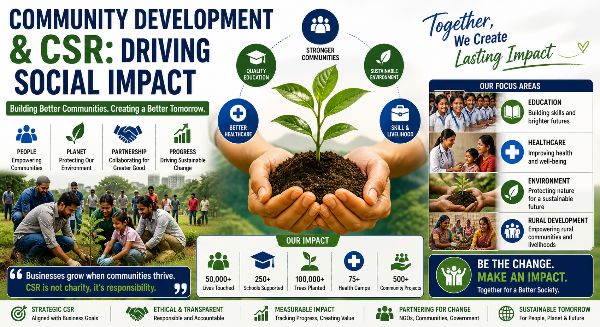
In an era where businesses are expected to contribute beyond profits, community development and Corporate Social Responsibility (CSR) have become essential pillars of sustainable growth. Organizations are increasingly recognizing their role in creating positive social impact, improving livelihoods, and supporting inclusive development. CSR is no longer just a regulatory requirement—it is a strategic approach to building trust, strengthening communities, and creating long-term value.
Understanding Community Development and CSR
Community development focuses on improving the quality of life for people by addressing social, economic, and environmental challenges. CSR, on the other hand, refers to the initiatives undertaken by companies to contribute to societal well-being.
Together, they create a framework where businesses actively participate in solving real-world problems, such as education, healthcare, environmental sustainability, and rural development.
The Importance of Social Responsibility
Businesses operate within communities and depend on them for resources, workforce, and customers. Giving back to society helps build strong relationships and enhances a company’s reputation.
CSR initiatives demonstrate a commitment to ethical practices and social welfare. This not only benefits communities but also strengthens brand credibility and customer loyalty.
Key Areas of CSR Impact
CSR activities cover a wide range of sectors. Education initiatives help improve literacy and skill development, while healthcare programs enhance access to medical services.
Environmental sustainability projects focus on conservation, waste management, and renewable energy. Rural development initiatives support livelihoods and infrastructure growth in underserved areas.
By addressing these areas, organizations contribute to holistic development.
Empowering Communities Through Development
Community development programs aim to empower individuals by providing resources, training, and opportunities. Skill development programs, for example, help individuals gain employment or start their own businesses.
Empowerment leads to self-reliance, reducing dependency and improving overall quality of life. When communities grow, businesses also benefit from a stronger and more stable environment.
Role of Businesses in Sustainable Development
Businesses play a crucial role in driving sustainable development. By integrating CSR into their core strategies, companies can create long-term impact rather than short-term solutions.
Sustainable practices ensure that economic growth does not come at the cost of environmental or social well-being. This balanced approach is essential for future progress.
Employee Engagement in CSR Activities
CSR is not limited to corporate policies—it also involves employee participation. Many organizations encourage employees to volunteer in community initiatives.
Employee involvement fosters a sense of purpose and strengthens organizational culture. It also creates a deeper connection between the company and the community.
Measuring Social Impact
To ensure effectiveness, CSR initiatives must be measurable. Organizations use key performance indicators to evaluate the impact of their programs.
Tracking outcomes such as improved education levels, healthcare access, or environmental improvements helps refine strategies and maximize impact.
Challenges in CSR Implementation
Despite its benefits, CSR implementation can face challenges such as limited resources, lack of awareness, and difficulty in measuring impact.
Overcoming these challenges requires proper planning, collaboration with stakeholders, and continuous monitoring. Partnerships with NGOs and local communities can enhance effectiveness.
The Future of CSR and Community Development
The future of CSR lies in innovation, collaboration, and scalability. Technology is enabling organizations to reach more people and create data-driven solutions.
Companies are moving toward purpose-driven strategies that align business goals with social impact. This shift is redefining how businesses operate in the modern world.
Creating Lasting Change
Community development and CSR are powerful tools for creating meaningful and lasting change. By addressing social challenges and empowering communities, organizations contribute to a better and more inclusive society.
Driving social impact requires commitment, collaboration, and a long-term vision. Businesses that embrace CSR as a core value will not only succeed economically but also leave a positive legacy for future generations.