- August 22, 2026
- Posted by: admin
- Category: Blog
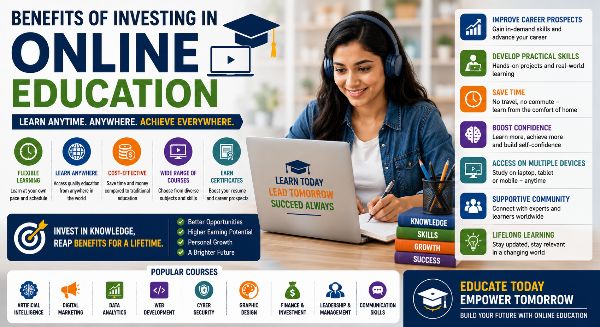
Education is one of the most valuable investments a person can make. However, traditional education can sometimes be difficult to access because of location, cost, time, or professional commitments. Online education has changed this by making learning more flexible, affordable, and accessible.
From students and job seekers to working professionals, freelancers, and entrepreneurs, people can now learn new skills from almost anywhere. Online courses can help learners improve their knowledge, prepare for career opportunities, and stay competitive in a rapidly changing job market.
What Is Online Education?
Online education refers to learning through digital platforms using computers, smartphones, tablets, and other internet-connected devices.
It can include:
- Recorded video courses
- Live online classes
- Webinars
- Digital certifications
- Interactive quizzes
- Practical assignments
- Online workshops
- Virtual training programs
Learners can choose programs based on their interests, career goals, and skill requirements.
1. Flexible Learning
One of the biggest benefits of online education is flexibility.
Learners can study:
- Before or after work
- During weekends
- From home
- While traveling
- According to their personal schedule
This makes online education particularly useful for working professionals and people with busy lifestyles.
2. Learn From Anywhere
Online education removes geographical barriers. You do not necessarily need to travel to a training center or relocate to another city to learn a new skill.
With a reliable internet connection, learners can access educational content from almost anywhere.
This makes quality learning more accessible to people in different locations.
3. Affordable Learning Opportunities
Online courses can often cost less than traditional classroom programs because learners may not have to pay for transportation, accommodation, or other classroom-related expenses.
Many platforms also provide:
- Free introductory courses
- Affordable skill-based courses
- Paid professional programs
- Certification programs
- Flexible subscription options
The important thing is to compare the quality and value of a course before enrolling.
4. Wide Range of Courses
Online education offers courses across numerous subjects and industries.
Popular areas include:
- Artificial Intelligence
- Digital Marketing
- Data Analytics
- Cybersecurity
- Graphic Design
- Web Development
- Financial Literacy
- Communication Skills
- Entrepreneurship
- Project Management
- Leadership
- Personal Development
This allows learners to select skills that match their career plans.
5. Develop Job-Ready Skills
Academic knowledge is important, but employers also value practical skills.
Online courses can help learners develop job-ready abilities such as:
- Digital communication
- Data analysis
- AI tools
- Marketing
- Project management
- Coding
- Design
- Business skills
Practical projects and assignments can make the learning experience more valuable.
6. Improve Career Opportunities
Investing in online education can support career development.
New skills may help you:
- Apply for better jobs
- Prepare for promotions
- Change careers
- Improve workplace performance
- Take on new responsibilities
- Explore freelance opportunities
While completing a course does not guarantee employment, relevant training can strengthen your professional profile.
7. Learn at Your Own Pace
Everyone learns differently. Online education allows learners to control the speed of their learning.
You can:
- Pause lessons
- Replay difficult topics
- Review previous modules
- Practice repeatedly
- Complete assignments according to your schedule
Self-paced learning can make education more comfortable and personalized.
8. Earn Professional Certifications
Many online courses offer certificates after successful completion.
Certifications can be useful for:
- Strengthening resumes
- Demonstrating specialized knowledge
- Updating professional profiles
- Supporting career transitions
- Showing commitment to continuous learning
However, certifications are most valuable when supported by practical knowledge and real-world experience.
9. Keep Up With Technology
Technology changes quickly. Skills that were highly valuable several years ago may need to be updated as new tools and processes emerge.
Online education makes it easier to learn about:
- Artificial Intelligence
- Automation
- Cloud computing
- Digital marketing
- Cybersecurity
- Data technologies
- Productivity tools
Continuous learning helps professionals stay adaptable.
10. Build Confidence
Learning a new skill can increase professional confidence.
As learners gain knowledge and practice, they may become more comfortable with:
- Solving problems
- Using technology
- Communicating ideas
- Handling professional tasks
- Taking on new responsibilities
Confidence can encourage individuals to pursue opportunities they may previously have avoided.
11. Supports Career Changes
Online education can provide a structured starting point for people who want to move into a different profession.
For example, someone interested in changing careers could learn:
- Digital marketing
- Data analytics
- Web development
- Graphic design
- AI tools
- Project management
Combining online learning with practical projects and experience can help create a stronger transition strategy.
12. Useful for Entrepreneurs
Entrepreneurs need knowledge across multiple areas.
Online courses can help business owners learn about:
- Marketing
- Sales
- Finance
- Customer service
- Branding
- Leadership
- Technology
- Business planning
Learning these skills can help entrepreneurs make more informed decisions and manage their businesses more effectively.
13. Encourages Lifelong Learning
Education should not stop after completing a degree. Modern careers require continuous development.
Online education encourages lifelong learning by making it convenient to keep acquiring knowledge throughout different stages of life.
A lifelong learner can continuously:
- Upgrade existing skills
- Learn new technologies
- Explore new industries
- Improve professional abilities
- Prepare for future opportunities
14. Builds Digital Literacy
Participating in online education itself develops important digital skills.
Learners become more comfortable with:
- Online communication
- Digital documents
- Video conferencing
- Cloud platforms
- Online research
- Digital collaboration
These abilities are increasingly important in modern workplaces.
15. Helps Create Multiple Income Opportunities
Learning practical skills can open additional income possibilities.
For example, someone trained in graphic design could offer freelance design services, while a digital marketing learner could work with small businesses or build their own online brand.
Other skills that can support additional income include:
- Content creation
- Web development
- Video editing
- Copywriting
- Online tutoring
- Data analysis
- Social media management
How to Get the Most From Online Education
Simply enrolling in a course is not enough. To maximize your investment:
- Set a clear learning goal.
- Choose a course relevant to your career.
- Create a regular study schedule.
- Complete assignments and projects.
- Practice what you learn.
- Build a portfolio where possible.
- Apply your skills to real-world situations.
- Continue learning after completing the course.
The real value of online education comes from applying knowledge rather than simply collecting certificates.
Conclusion
Investing in online education is an investment in knowledge, skills, and future opportunities. With flexible schedules, affordable options, diverse courses, practical training, and digital certifications, online learning has become an important pathway for modern education and professional development.
Whether you are a student looking to build career-ready skills, a professional preparing for advancement, or an entrepreneur developing your business knowledge, online education can help you keep moving forward.