- September 10, 2026
- Posted by: admin
- Category: Blog
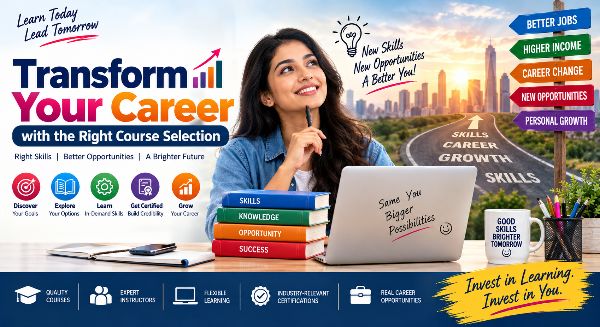
Choosing the right course can be one of the most important decisions in your professional journey. Whether you are a student planning your first career, a working professional looking to upgrade your skills, or someone considering a career change, the right training program can provide valuable knowledge, practical abilities, and greater confidence.
With thousands of online and offline courses available today, making the right choice can sometimes feel overwhelming. The key is to select a course that matches your interests, career goals, existing abilities, and the requirements of your target industry.
Why Course Selection Matters
A course is more than a certificate. The right program can help you develop skills that you can apply in real-world situations.
A carefully selected course can help you:
- Develop job-ready skills
- Improve your professional knowledge
- Prepare for career advancement
- Explore a new profession
- Build entrepreneurial skills
- Increase your confidence
- Expand your employment opportunities
The wrong course, however, may consume time and money without providing skills relevant to your goals.
Start with Your Career Goal
Before enrolling in any course, define what you want to achieve.
Ask yourself:
- What career do I want?
- What skills does that career require?
- Do I want employment or entrepreneurship?
- Am I looking to change careers?
- Do I need basic or advanced training?
- How much time can I dedicate to learning?
Having a clear objective makes the selection process much easier.
Identify Your Interests and Strengths
Your interests can provide valuable clues when choosing a career path.
For example, someone who enjoys creativity may explore:
- Graphic design
- Makeup artistry
- Beauty and wellness
- Baking
- Content creation
Someone interested in technology might consider:
- Website development
- Data analytics
- Artificial intelligence
- Digital marketing
- Cybersecurity
Choosing a subject that matches your interests can make learning more engaging.
Focus on Practical Skills
Skill-based education is increasingly valuable because it emphasizes practical application.
When comparing courses, look for programs that include:
- Hands-on training
- Practical assignments
- Real-world projects
- Case studies
- Demonstrations
- Industry examples
The goal should be to finish the course with skills you can actually use.
Research the Course Curriculum
Always review the curriculum before enrolling.
Check whether it covers:
- Core concepts
- Current industry practices
- Practical techniques
- Relevant tools
- Advanced topics
- Projects and assessments
A well-structured curriculum should provide a logical learning journey from fundamentals to practical application.
Consider Online and Offline Learning
Both online and classroom-based education have advantages.
Online Courses
Online courses can provide:
- Flexible schedules
- Remote access
- Self-paced learning
- Wide subject selection
- Convenient revision
They are particularly useful for working professionals and learners with busy schedules.
Classroom Courses
Traditional classroom programs can offer:
- Face-to-face interaction
- Practical demonstrations
- Direct instructor guidance
- Peer learning
- Structured schedules
Choose the format that best suits your learning style and circumstances.
Evaluate the Instructor
The quality of teaching can have a significant impact on your learning experience.
Before choosing a course, consider the instructor’s:
- Industry experience
- Professional background
- Subject knowledge
- Teaching approach
- Student feedback
Experienced instructors can provide practical insights that textbooks alone may not offer.
Look for Industry-Relevant Training
Industries change continuously because of technology, customer preferences, and new business models.
Choose courses that are regularly updated and reflect current industry requirements.
For example, a modern digital marketing course may cover areas such as SEO, social media, analytics, content strategy, and paid advertising rather than focusing only on traditional marketing concepts.
Consider Certification
A course certificate can demonstrate that you completed a structured training program.
However, certification should be considered alongside practical learning.
A strong professional profile can include:
- Relevant certifications
- Practical projects
- Portfolio work
- Internships
- Professional experience
- Demonstrable skills
Skills and the ability to apply them are essential for career growth.
Check Course Duration and Schedule
A course should fit realistically into your lifestyle.
Consider:
- Total duration
- Weekly study requirements
- Class timings
- Assignment deadlines
- Examination schedules
- Access period for online materials
Choosing a manageable schedule helps you complete the course successfully.
Compare Course Costs
Price should not be the only factor when selecting a course.
Instead, consider the overall value, including:
- Curriculum quality
- Instructor expertise
- Practical training
- Learning resources
- Student support
- Certification
- Career guidance
An affordable course is not necessarily the best choice, and an expensive course is not automatically superior.
Read Reviews Carefully
Student reviews can provide useful insights into the learning experience.
Look for feedback about:
- Course quality
- Instructor support
- Practical assignments
- Learning materials
- Platform usability
- Overall experience
Consider multiple reviews rather than relying on a single opinion.
Choose Skills with Career Potential
While passion is important, it is also useful to understand the career opportunities associated with a particular skill.
Growing areas of professional education include:
- Digital marketing
- Artificial intelligence
- Data analytics
- Communication
- Business management
- Website development
- Beauty and wellness
- Hospitality
- Bakery and confectionery
- Vocational skills
The ideal course combines your interests with useful career or business opportunities.
Don’t Ignore Soft Skills
Technical expertise is only one part of career success.
Consider courses that also help develop:
- Communication
- Leadership
- Teamwork
- Time management
- Problem-solving
- Emotional intelligence
- Presentation skills
Strong soft skills can complement technical abilities and improve workplace performance.
Create a Learning Plan
Once you select a course, create a simple plan to stay consistent.
A useful approach is:
Learn → Practice → Apply → Review → Improve
Set weekly learning targets, complete assignments on time, and look for opportunities to apply your new knowledge.
Build a Portfolio
A portfolio can demonstrate your capabilities to employers and clients.
Depending on your chosen field, you could create:
- Websites
- Marketing campaigns
- Design projects
- Writing samples
- Makeup portfolios
- Bakery product collections
- Business plans
- Data projects
Practical evidence can make your skills easier to demonstrate.
Use Your New Skills Professionally
After completing your course, look for opportunities to apply your skills.
You can:
- Apply for jobs
- Seek internships
- Start freelancing
- Offer services
- Build a business
- Create a professional portfolio
- Pursue advanced training
Turning education into practical experience is what transforms learning into career progress.
Continue Learning
Completing one course does not mean your learning journey has to end. Industries continuously evolve, and professionals need to update their knowledge.
Consider taking advanced courses, attending workshops, learning new tools, or following industry developments.
Continuous learning keeps your career adaptable and future-ready.
Common Mistakes to Avoid
Avoid selecting courses based only on:
- Popularity
- Low price
- Attractive advertisements
- Promises of instant employment
- Short duration
Instead, investigate the curriculum, instructor, practical components, learning format, and relevance to your career goals.
Conclusion
The right course can become a powerful stepping stone toward career transformation. It can help you acquire practical skills, develop confidence, explore new opportunities, and prepare for the changing demands of the professional world.
The best course is not necessarily the most expensive or popular one. It is the one that aligns with your goals, interests, learning needs, and career ambitions.
Take time to research your options, compare curricula, evaluate instructors, and understand the skills you will gain. Then commit yourself to learning, practicing, and applying those skills.