- September 1, 2026
- Posted by: admin
- Category: Blog
In today’s fast-changing world, continuous learning has become one of the most important tools for personal and professional growth. Whether you are a student preparing for your first job, a working professional looking to upgrade your skills, or an entrepreneur aiming to grow a business, choosing the right course can help you move closer to your goals.
With thousands of online and offline learning options available, deciding where to begin can feel challenging. The best approach is to choose courses that match your interests, career goals, strengths, and the skills required in your chosen field.
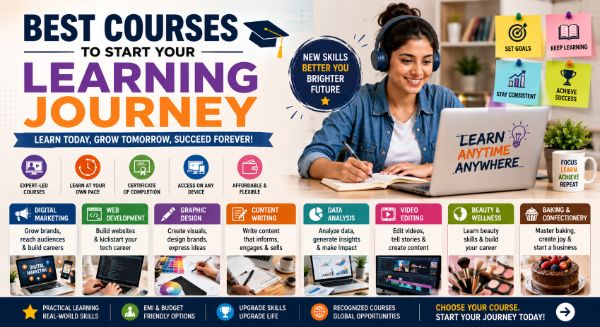
Here are some of the best types of courses to consider when starting your learning journey.
Digital Marketing Courses
Digital marketing is an excellent choice for learners interested in business, advertising, branding, and online growth.
A comprehensive digital marketing course may cover:
- Search engine optimization
- Social media marketing
- Content marketing
- Email marketing
- Paid advertising
- Google Ads
- Analytics
- Marketing strategy
These skills can be useful for careers, freelancing, entrepreneurship, and promoting your own business.
Website Development Courses
Businesses, organizations, and individuals increasingly need websites and digital platforms. Learning website development can open opportunities in both technical and creative fields.
Beginners can start with:
- WordPress website development
- HTML and CSS
- Basic JavaScript
- Website design
- Landing page creation
- E-commerce website development
- Website maintenance
For those who prefer a beginner-friendly approach, no-code and low-code website-building tools can also provide a useful starting point.
Graphic Design Courses
Graphic design is ideal for creative learners who enjoy visual communication.
A beginner course may teach:
- Design principles
- Typography
- Color theory
- Social media graphics
- Branding
- Logo design
- Marketing creatives
- Presentation design
Building a strong portfolio can help learners demonstrate their practical abilities.
English and Communication Skills Courses
Strong communication skills can benefit almost every career.
Courses may focus on:
- Spoken English
- Professional communication
- Business writing
- Presentation skills
- Interview preparation
- Public speaking
- Workplace communication
Improving communication can increase confidence and help learners perform more effectively in professional environments.
Artificial Intelligence and Digital Tools
AI and digital productivity tools are becoming part of modern workplaces. Learning how to use these tools effectively can help students and professionals improve productivity and adapt to changing work environments.
Beginner-friendly topics include:
- AI fundamentals
- AI productivity tools
- Responsible use of AI
- Prompt writing
- AI-assisted content creation
- Workflow improvement
- Digital automation basics
The most valuable approach is to learn how these tools can support real work rather than simply learning individual applications.
Data Analysis Courses
Data skills are useful across business, marketing, finance, operations, and technology.
A beginner learning path may include:
- Spreadsheet skills
- Data organization
- Basic statistics
- Data visualization
- Reporting
- Dashboard creation
- Data interpretation
These skills can help professionals make informed decisions and communicate insights clearly.
Social Media Marketing Courses
Social media has become an important channel for businesses and personal brands.
A course may teach:
- Content planning
- Audience engagement
- Social media strategy
- Short-form content
- Campaign planning
- Paid social advertising
- Performance analysis
These skills are useful for aspiring marketers, freelancers, entrepreneurs, and content creators.
Content Writing and Copywriting Courses
Businesses need clear and engaging content for websites, blogs, advertisements, emails, and social media.
Learners can develop skills in:
- Blog writing
- SEO writing
- Website content
- Advertising copy
- Product descriptions
- Email writing
- Social media content
Writing skills can also complement careers in marketing, communications, and media.
Video Editing and Content Creation
Video has become a powerful communication and marketing format.
A beginner course may cover:
- Video editing basics
- Storytelling
- Short-form videos
- YouTube content
- Audio editing
- Visual transitions
- Content planning
Practical projects can help learners build a portfolio and gain confidence.
Beauty and Wellness Courses
For learners interested in the beauty industry, professional courses can provide practical skills and career opportunities.
Popular options include:
- Beautician training
- Makeup artistry
- Hair styling
- Skincare
- Nail art
- Spa and wellness services
- Salon management
These courses can support employment, freelancing, or entrepreneurship.
Bakery and Confectionery Courses
Baking courses are suitable for creative individuals interested in food, hospitality, and entrepreneurship.
Students can learn:
- Bread making
- Cake preparation
- Cake decoration
- Pastry making
- Cookies and biscuits
- Chocolates
- Desserts
- Bakery management
These skills can lead to careers in hotels, bakeries, restaurants, or home-based businesses.
Cyber Awareness and Digital Safety Courses
As people spend more time online, understanding basic cybersecurity and digital safety has become increasingly important.
A beginner course may cover:
- Password security
- Online privacy
- Phishing awareness
- Social media safety
- Safe browsing
- Data protection
- Digital hygiene
Cyber awareness is a valuable skill for students, professionals, and everyday internet users.
Soft Skills and Personality Development
Technical knowledge is important, but soft skills can strongly influence career growth.
Useful courses include:
- Communication skills
- Leadership
- Teamwork
- Time management
- Emotional intelligence
- Problem-solving
- Workplace ethics
- Confidence building
These skills help individuals work effectively with others and adapt to professional challenges.
How to Choose the Right Course
Before enrolling in a course, consider the following questions:
What Are Your Career Goals?
Choose a course that supports where you want to go professionally.
What Interests You?
Learning becomes easier when you genuinely enjoy the subject.
Does the Course Include Practical Learning?
Look for opportunities to complete assignments, projects, or hands-on exercises.
Can You Build a Portfolio?
Practical work can often demonstrate your skills better than a certificate alone.
Does the Course Fit Your Schedule?
Online and self-paced courses can be useful if you are balancing education, work, or other responsibilities.
Start with One Skill
One common mistake is trying to learn too many skills at once. Instead, select one area and build a strong foundation.
For example, you could begin with:
- Digital Marketing + Social Media
- Website Development + SEO
- Graphic Design + Content Creation
- Makeup + Beauty Services
- Baking + Bakery Entrepreneurship
Once you become comfortable with one skill, you can gradually add complementary knowledge.
Make Learning a Habit
Success in skill development depends on consistency.
A simple learning routine can include:
- Setting aside regular study time.
- Following a structured learning path.
- Taking notes.
- Completing practical assignments.
- Building projects.
- Reviewing your progress.
- Continuing to improve.
Small, consistent efforts can create significant progress over time.
Build Skills for Your Future
The best course is not necessarily the most popular one. It is the course that helps you develop useful knowledge and practical abilities aligned with your personal and professional goals.
Your learning journey may begin with digital marketing, website development, communication, AI tools, beauty, baking, data analysis, or another field entirely. What matters most is taking the first step and remaining committed to continuous improvement.
In a world where industries and technologies continue to evolve, learning new skills can help you discover opportunities, improve confidence, and prepare for future challenges.
Start with one course, practice what you learn, build real-world experience, and allow your skills to grow step by step. Your learning journey can begin today.