- August 18, 2026
- Posted by: admin
- Category: Blog
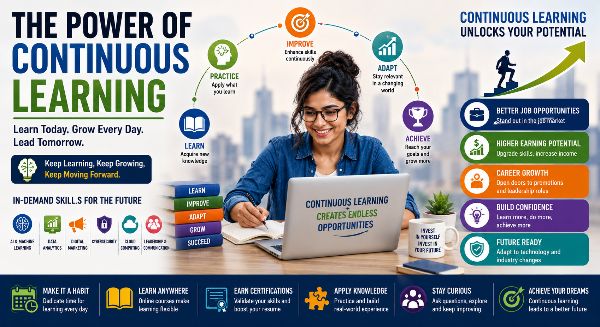
The world is changing faster than ever. New technologies, evolving industries, changing customer expectations, and new ways of working are transforming the skills required for professional success. In such an environment, learning cannot stop after completing school, college, or a degree.
Continuous learning is the process of regularly acquiring new knowledge, improving existing skills, and adapting to changes throughout life. It helps individuals remain relevant, confident, productive, and prepared for new opportunities.
Whether you are a student, working professional, entrepreneur, freelancer, or business owner, continuous learning can become one of the most powerful tools for personal and professional growth.
What Is Continuous Learning?
Continuous learning means making education and skill development an ongoing part of your life.
It can include:
- Online courses
- Professional certifications
- Workshops and webinars
- Reading books and industry publications
- Learning new technologies
- Practical projects
- Mentorship
- Workplace training
- Self-directed learning
Continuous learning does not necessarily require returning to a traditional classroom. Today, digital platforms make it possible to learn new skills from almost anywhere.
Why Continuous Learning Matters
Industries are constantly evolving. Skills that were highly valuable a few years ago may need to be updated as new technologies emerge.
Continuous learning helps individuals:
- Stay competitive
- Adapt to change
- Improve productivity
- Develop new expertise
- Build confidence
- Discover career opportunities
- Prepare for future roles
Instead of waiting for change to happen, continuous learners prepare themselves for it.
Continuous Learning and Career Growth
Professional growth depends heavily on the ability to develop new capabilities.
Learning new skills can help employees qualify for:
- Promotions
- Leadership positions
- Specialized roles
- New projects
- Career transitions
- Higher responsibilities
For example, a marketing professional who learns data analytics, SEO, AI tools, and digital advertising can expand their capabilities and become prepared for more advanced opportunities.
The Role of Digital Skills
Digital technology has become part of almost every profession. As businesses adopt digital tools, employees need to understand how to use them effectively.
Some valuable digital skills include:
- Artificial Intelligence
- Data analytics
- Digital marketing
- Cybersecurity awareness
- Cloud computing
- Website development
- Digital communication
- Online collaboration
Developing these skills can improve both employability and workplace productivity.
Continuous Learning and Artificial Intelligence
Artificial Intelligence is changing how many tasks are performed across industries. Professionals who understand how to use AI responsibly can improve productivity and explore new ways of working.
AI learning can include:
- Generative AI tools
- Prompt writing
- AI-assisted research
- Content creation
- Workflow automation
- Data analysis
- AI productivity tools
The goal is not simply to follow technology trends but to understand how technology can be applied to solve real-world problems.
Learning Builds Confidence
One of the less visible benefits of continuous learning is increased confidence.
When people develop new skills, they often become more comfortable with:
- Taking on challenging tasks
- Speaking in professional settings
- Using new technologies
- Solving problems
- Leading projects
- Making decisions
Confidence grows when knowledge is combined with regular practice.
Continuous Learning for Students
Students can benefit from continuous learning by developing practical skills alongside academic knowledge.
Useful areas include:
- Communication
- Digital literacy
- AI fundamentals
- Coding
- Financial literacy
- Entrepreneurship
- Presentation skills
- Data analysis
Building these skills early can help students transition more confidently into higher education and employment.
Continuous Learning for Working Professionals
Working professionals often have limited time, but learning does not have to require several hours every day.
A professional can:
- Spend 30 minutes a day learning
- Take weekend courses
- Attend online webinars
- Complete short certifications
- Practice new skills through workplace projects
Small, consistent learning efforts can create significant results over time.
Continuous Learning for Entrepreneurs
Entrepreneurs need to learn continuously because business environments change rapidly.
Business owners can improve their knowledge in:
- Digital marketing
- Finance
- Customer service
- Leadership
- Sales
- Technology
- Business strategy
- Data analysis
Learning helps entrepreneurs make better decisions and identify new opportunities.
Online Learning Makes Continuous Education Easier
Online education has transformed access to knowledge. Learners can now choose from thousands of courses covering professional and personal development.
Online courses offer:
- Flexible schedules
- Self-paced learning
- Affordable training
- Digital certifications
- Practical assignments
- Access from anywhere
This makes continuous learning accessible to students, professionals, and entrepreneurs alike.
How to Build a Continuous Learning Habit
Developing a learning habit does not need to be complicated.
1. Set a Learning Goal
Choose one specific skill you want to improve.
2. Create a Schedule
Set aside a regular time for learning each day or week.
3. Choose Quality Resources
Use structured courses, books, tutorials, workshops, and reliable educational resources.
4. Practice What You Learn
Apply new knowledge through projects and real-world tasks.
5. Track Your Progress
Keep a record of completed courses, projects, certifications, and new skills.
6. Keep Improving
Once you achieve one learning goal, choose another.
The Importance of Practical Learning
Knowledge becomes more valuable when it can be applied.
Instead of only watching lessons, learners should try to:
- Complete projects
- Solve real problems
- Create portfolios
- Participate in practical assignments
- Apply new skills at work
- Take freelance projects
Practical experience demonstrates what you can actually do.
Continuous Learning and Career Resilience
Career paths are no longer always linear. People may change industries, learn new professions, work remotely, freelance, or start businesses.
Continuous learning creates career resilience by helping individuals adapt to these changes.
A person who regularly develops new skills is more likely to have multiple options when their industry or job requirements change.
Benefits of Continuous Learning
Continuous learning can provide long-term benefits such as:
- Better career opportunities
- Improved employability
- Increased productivity
- Greater professional confidence
- Higher earning potential
- Career flexibility
- Better problem-solving
- Stronger leadership abilities
- Entrepreneurial opportunities
- Future readiness
Creating a Learning Mindset
Continuous learning is not only about collecting certificates. It is about developing a mindset of curiosity and improvement.
A strong learning mindset means being willing to:
- Ask questions
- Accept feedback
- Learn from mistakes
- Explore new ideas
- Adapt to change
- Try new technologies
- Improve existing abilities
This mindset can benefit both professional and personal life.
The Future Belongs to Lifelong Learners
Technology will continue to evolve, industries will continue to change, and new career opportunities will emerge. Nobody can predict every skill that will be required in the future.
However, one ability will always remain valuable: the ability to learn.
Professionals who remain curious and adaptable will be better positioned to understand new technologies, respond to workplace changes, and take advantage of emerging opportunities.
Conclusion
The power of continuous learning lies in its ability to keep people prepared for change. In a rapidly evolving world, education should not end with a degree or a first job. Learning should continue throughout your personal and professional journey.
Whether you learn Artificial Intelligence, digital marketing, cybersecurity, communication, leadership, data analytics, or another practical skill, every new ability can strengthen your future.