- August 14, 2026
- Posted by: admin
- Category: Blog
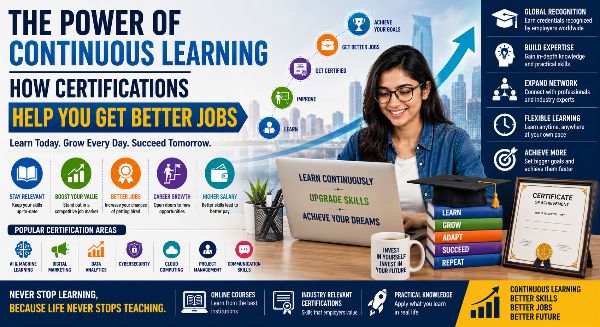
The world of work is changing rapidly. New technologies, evolving industries, automation, and changing employer expectations mean that the skills required today may not be enough for tomorrow. In this environment, continuous learning has become an essential part of professional success.
One practical way to demonstrate continuous learning is through professional certifications. Certifications can help learners develop specialized knowledge, strengthen their resumes, and demonstrate a commitment to professional growth. When combined with practical experience and strong soft skills, they can improve your readiness for better career opportunities.
What Is Continuous Learning?
Continuous learning means consistently developing new knowledge and improving existing skills throughout your career.
It can include:
- Online courses
- Professional certifications
- Workshops and webinars
- Industry training
- Practical projects
- Self-directed learning
- Professional conferences
Continuous learning is not limited to a particular age or career stage. Students, fresh graduates, working professionals, entrepreneurs, and experienced managers can all benefit from it.
Why Continuous Learning Is Important
Industries are constantly evolving. Artificial Intelligence, digital transformation, cloud technology, automation, and new business models are changing the workplace.
Continuous learning helps professionals:
- Stay relevant
- Adapt to new technologies
- Improve productivity
- Develop specialized expertise
- Build professional confidence
- Prepare for new responsibilities
- Remain competitive in the job market
Instead of waiting for skills to become outdated, continuous learners actively prepare for the future.
How Certifications Support Career Growth
Professional certifications provide structured learning in a specific area. They can demonstrate that a learner has completed a defined training program or assessment.
Depending on the field, certifications can cover:
- Artificial Intelligence
- Data Analytics
- Digital Marketing
- Cybersecurity
- Cloud Computing
- Project Management
- Communication
- Financial Management
- Entrepreneurship
A relevant certification can complement your academic qualifications and professional experience.
Certifications Can Strengthen Your Resume
Recruiters often review many applications for the same position. Relevant certifications can make your professional profile more informative by highlighting specialized skills.
For example, a candidate applying for a digital marketing position may strengthen their profile with certifications in:
- SEO
- Google Ads
- Social media marketing
- Content marketing
- Analytics
The key is to choose credentials that are relevant to the position you want.
Certifications Demonstrate Initiative
Completing a certification shows that you have taken an active step toward learning something new.
It can communicate qualities such as:
- Commitment
- Discipline
- Curiosity
- Professional ambition
- Willingness to learn
These qualities are valuable in a workplace where employees are expected to adapt to change.
Certifications Can Support Career Changes
Continuous learning is particularly useful when changing careers.
Suppose a professional from a traditional business role wants to move into digital marketing. A structured certification program can provide foundational knowledge in SEO, social media, advertising, analytics, and content strategy.
Adding practical projects to that learning can help demonstrate the candidate’s readiness for a new field.
Certifications and Better Job Opportunities
A certification does not guarantee employment, but it can strengthen your qualifications when it is relevant to the role.
Certifications can help candidates:
- Demonstrate specialized knowledge
- Improve their professional profile
- Meet specific job requirements
- Prepare for interviews
- Stand out among candidates with similar qualifications
The strongest job applications generally combine education, certifications, experience, practical projects, and measurable achievements.
Online Certifications Make Learning Flexible
Online education has made continuous learning easier for busy professionals.
Learners can study:
- Before or after work
- During weekends
- From home
- While traveling
- At their own pace
This flexibility allows professionals to upgrade their skills without necessarily taking a career break.
Practical Skills Matter Too
A certificate is valuable, but employers also want to know whether you can apply what you have learned.
After completing a course, try to:
- Build practical projects
- Create a portfolio
- Complete case studies
- Take freelance assignments
- Apply new skills at work
- Participate in internships
For example, after completing a digital marketing certification, you could create a sample SEO strategy or social media campaign to demonstrate practical knowledge.
Combine Technical and Soft Skills
Career success requires more than technical expertise.
Professionals should also develop:
- Communication
- Leadership
- Critical thinking
- Problem-solving
- Teamwork
- Creativity
- Time management
- Emotional intelligence
Combining technical skills with strong human skills can make professionals more adaptable and effective.
Certifications for Different Career Stages
For Students
Certifications can help students gain practical skills before entering the workforce.
Useful areas include:
- Digital literacy
- AI fundamentals
- Communication
- Digital marketing
- Data analytics
- Coding
For Fresh Graduates
Graduates can use certifications to specialize in areas that complement their academic qualifications.
For Working Professionals
Professionals can use certifications to prepare for promotions, expand their responsibilities, or transition into new roles.
For Entrepreneurs
Business owners can learn skills related to marketing, finance, leadership, technology, and customer management.
How to Build a Continuous Learning Plan
Continuous learning becomes easier when you have a clear strategy.
1. Identify Your Career Goal
Decide what type of job, promotion, or professional opportunity you want.
2. Identify Skill Gaps
Compare your current skills with those required for your target role.
3. Choose Relevant Courses
Select certifications or training programs that address those gaps.
4. Practice What You Learn
Use projects and real-world assignments to turn knowledge into practical ability.
5. Document Your Achievements
Update your resume, portfolio, and professional profiles with relevant certifications and projects.
6. Keep Learning
Technology and industry requirements change continuously, so professional development should be an ongoing process.
The Future Belongs to Lifelong Learners
The future workplace will reward professionals who can adapt. As technology continues to influence industries, people who regularly update their knowledge will be better prepared for new opportunities.
Continuous learning also creates a mindset of improvement. Instead of seeing change as a threat, lifelong learners can view it as an opportunity to grow.
Conclusion
Continuous learning is one of the most powerful ways to build a future-ready career. Professional certifications provide a structured path to gaining specialized knowledge and can strengthen your professional profile when combined with practical experience.
Whether you are starting your career, looking for a better job, seeking a promotion, or changing professions, learning should never stop.
Learn continuously, build relevant skills, earn meaningful certifications, and keep preparing yourself for the opportunities of tomorrow.