- August 11, 2026
- Posted by: admin
- Category: Blog
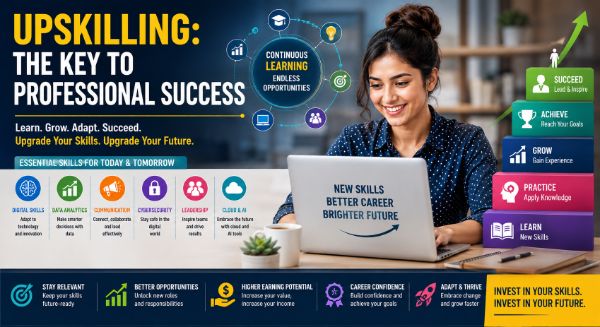
The modern workplace is changing rapidly. New technologies, evolving customer expectations, automation, and changing business models are creating new opportunities while also changing the skills employers need. In this environment, simply relying on the skills you acquired at the beginning of your career may not be enough.
Upskilling—the process of learning new skills or improving existing ones—has become an important part of professional growth. It helps employees remain competitive, prepares them for new responsibilities, and enables them to adapt to changing workplace requirements.
Whether you are a student preparing for your first job, a working professional seeking a promotion, or an entrepreneur building a business, continuous learning can play a major role in your long-term success.
What is Upskilling?
Upskilling means developing additional knowledge and abilities that improve your performance in your current profession or prepare you for future opportunities.
For example, a marketing professional might learn:
- Digital marketing
- SEO
- Data analytics
- Social media advertising
- AI-powered marketing tools
Similarly, an administrative professional may learn advanced spreadsheets, project management, communication, and automation tools.
The goal is not necessarily to change careers. Instead, upskilling helps you become more capable and valuable in your existing field.
Why Upskilling Matters Today
Technology is transforming almost every industry. Artificial Intelligence, cloud computing, automation, digital platforms, and data-driven decision-making are changing workplace processes.
Upskilling helps professionals:
- Stay relevant in their industry
- Improve productivity
- Adapt to technological changes
- Qualify for new responsibilities
- Increase career opportunities
- Build professional confidence
- Prepare for future roles
Continuous learning makes career development a proactive process rather than something that happens only when a new job becomes available.
Upskilling and Career Growth
One of the biggest advantages of upskilling is its connection to career advancement.
Professionals who consistently develop relevant skills can become better prepared for:
- Promotions
- Leadership positions
- New job opportunities
- Career transitions
- Specialized roles
- Freelance opportunities
For example, someone working in basic digital marketing can develop expertise in analytics, paid advertising, SEO, and AI tools to qualify for more advanced marketing positions.
Digital Skills for the Modern Workplace
Digital skills are becoming increasingly important across industries.
Some valuable areas include:
Artificial Intelligence
Learning how to use AI tools can improve productivity, research, content creation, analysis, and automation.
Data Analytics
Understanding data helps professionals identify trends, measure performance, and support better decision-making.
Cybersecurity Awareness
Basic cybersecurity knowledge helps employees protect company information, customer data, and digital accounts.
Digital Marketing
SEO, social media marketing, online advertising, email marketing, and analytics are valuable skills for modern businesses.
Cloud Computing
Knowledge of cloud-based platforms supports remote collaboration, data management, and digital workflows.
Soft Skills Are Equally Important
Upskilling is not limited to technical abilities. Soft skills remain essential for professional success.
Important soft skills include:
- Communication
- Leadership
- Teamwork
- Critical thinking
- Problem-solving
- Time management
- Adaptability
- Emotional intelligence
- Presentation skills
A professional who combines technical knowledge with strong communication and leadership abilities can create greater value in the workplace.
Upskilling Through Online Courses
Online learning has made professional development more accessible than ever.
Professionals can learn through:
- Online courses
- Video lessons
- Webinars
- Digital certifications
- Virtual workshops
- Skill-based training programs
The biggest advantage is flexibility. Employees can learn after work, during weekends, or according to their personal schedule without necessarily leaving their current jobs.
How to Choose the Right Upskilling Course
With thousands of courses available online, choosing the right one requires careful planning.
Consider:
1. Your career goals: Identify where you want your career to go.
2. Industry demand: Research which skills are becoming valuable in your field.
3. Practical training: Look for courses that include assignments, projects, or real-world applications.
4. Course quality: Review the curriculum, instructors, and learning resources.
5. Certification: Consider whether the certificate can support your professional profile.
6. Flexibility: Choose a learning format that fits your schedule.
Create a Personal Upskilling Plan
A structured learning plan can make upskilling more effective.
Step 1: Identify Your Skill Gaps
Determine which skills you currently have and which ones you need to develop.
Step 2: Set Clear Goals
Instead of saying “I want to learn technology,” set a specific goal such as “I want to learn basic data analytics within three months.”
Step 3: Choose a Learning Resource
Select an online course, workshop, certification, or training program that matches your objective.
Step 4: Practice Regularly
Apply what you learn through projects and real-world tasks.
Step 5: Build Your Portfolio
Showcase relevant projects, certifications, and achievements on your resume and professional profiles.
Step 6: Continue Learning
Technology changes constantly, so professional development should be an ongoing process.
Benefits of Upskilling
A consistent upskilling strategy can provide several benefits:
- Better career opportunities
- Increased productivity
- Improved professional confidence
- Higher earning potential
- Greater job flexibility
- Stronger resumes
- Better leadership opportunities
- Increased employability
- Career adaptability
- Opportunities for entrepreneurship
Upskilling for Students and Fresh Graduates
Students can gain a significant advantage by developing practical skills before entering the workforce.
Useful areas include:
- Digital literacy
- AI fundamentals
- Communication
- Data analysis
- Digital marketing
- Coding
- Graphic design
- Financial literacy
- Entrepreneurship
Combining academic knowledge with practical skills can make graduates more prepared for real-world employment.
Upskilling for Working Professionals
Working professionals can use upskilling to remain competitive without interrupting their careers.
Learning new skills can help employees take on more responsibilities, improve workplace performance, and prepare for promotions or career changes.
Even dedicating a few hours each week to learning can create meaningful long-term progress.
The Role of Employers
Organizations also benefit when employees continuously develop their skills.
Companies can support upskilling through:
- Employee training programs
- Online learning subscriptions
- Workshops
- Mentorship
- Certification support
- Internal career development programs
A culture of learning can improve employee engagement, productivity, and organizational adaptability.
Upskilling and the Future of Work
The future workplace will require professionals who can work alongside technology rather than simply compete with it. As automation handles more repetitive tasks, human capabilities such as creativity, critical thinking, communication, leadership, and problem-solving will remain extremely valuable.
Professionals who combine these human skills with digital expertise will be better positioned to adapt to emerging career opportunities.
Conclusion
Upskilling is more than learning a new skill—it is an investment in your professional future. In a rapidly changing job market, continuous learning helps professionals remain relevant, productive, and prepared for new opportunities.
Whether you choose to learn Artificial Intelligence, data analytics, digital marketing, cybersecurity, communication, leadership, or another career-focused skill, every new ability can strengthen your professional profile.