- August 8, 2026
- Posted by: admin
- Category: Blog
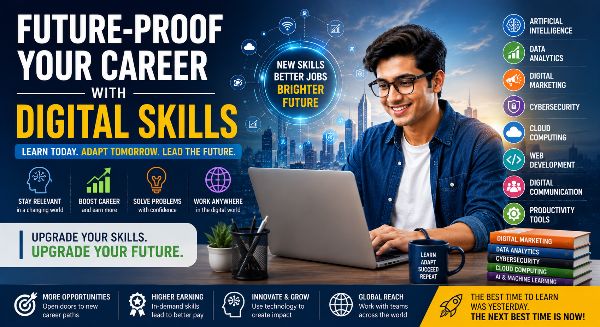
The workplace is changing faster than ever. Artificial Intelligence, automation, cloud computing, digital communication, and online platforms are transforming how businesses operate and how people build careers. In this rapidly evolving environment, traditional qualifications are valuable, but digital skills are becoming equally important for long-term professional success.
Whether you are a student, job seeker, working professional, freelancer, or entrepreneur, developing the right digital skills can help you remain competitive, adapt to changing technologies, and discover new career opportunities.
What Are Digital Skills?
Digital skills are the abilities needed to use digital technologies effectively, safely, and productively. They range from basic computer and internet knowledge to advanced capabilities such as Artificial Intelligence, data analysis, cybersecurity, programming, and digital marketing.
Some important digital skills include:
- Digital communication
- Data analysis
- Artificial Intelligence (AI)
- Digital marketing
- Cybersecurity
- Cloud computing
- Content creation
- Website development
- Online collaboration
- Digital productivity
These skills are increasingly relevant across almost every industry.
Why Digital Skills Are Important for Career Growth
Businesses are becoming increasingly dependent on technology. From customer service and marketing to finance, manufacturing, healthcare, and education, digital tools are changing everyday workflows.
Professionals with strong digital skills can:
- Work more efficiently
- Adapt to new technologies
- Solve problems faster
- Collaborate remotely
- Improve productivity
- Access more career opportunities
- Build additional income streams
Digital knowledge can therefore become a powerful advantage in a competitive job market.
1. Learn Artificial Intelligence Skills
Artificial Intelligence is one of the most important technologies shaping the future of work.
You don’t necessarily need to become an AI engineer to benefit from AI. Professionals across different fields can learn how to use AI tools for:
- Research
- Content creation
- Data analysis
- Productivity
- Automation
- Customer support
- Business planning
Understanding responsible and effective AI usage can help professionals save time and focus on higher-value tasks.
2. Develop Data Skills
Data plays an important role in modern decision-making. Companies use data to understand customers, identify trends, measure performance, and plan strategies.
Useful data skills include:
- Spreadsheet analysis
- Data visualization
- Basic statistics
- Dashboard creation
- SQL fundamentals
- Business analytics
Even basic data literacy can make professionals more effective in their roles.
3. Master Digital Communication
Communication has moved beyond traditional meetings and letters. Professionals now communicate through email, video conferencing, messaging platforms, collaborative documents, and social networks.
Digital communication skills include:
- Professional email writing
- Online presentations
- Video conferencing
- Collaborative tools
- Social media communication
- Digital etiquette
Strong digital communication improves teamwork and professional relationships.
4. Learn Cybersecurity Basics
As businesses and individuals become more digitally connected, cybersecurity awareness is essential.
Everyone should understand basic practices such as:
- Creating strong passwords
- Using two-factor authentication
- Recognizing phishing attempts
- Protecting sensitive information
- Updating software
- Using secure networks
Cybersecurity skills are particularly valuable for professionals handling customer, financial, or business information.
5. Build Digital Marketing Skills
Businesses increasingly depend on digital channels to reach customers.
Digital marketing skills include:
- Search Engine Optimization (SEO)
- Social media marketing
- Content marketing
- Email marketing
- Online advertising
- Web analytics
- Brand management
These skills can lead to careers in marketing as well as freelance and entrepreneurial opportunities.
6. Understand Cloud Technology
Cloud computing has changed how organizations store information, operate applications, and collaborate.
Basic cloud knowledge can help professionals understand:
- Cloud storage
- Online collaboration
- Cloud-based applications
- Data sharing
- Remote work systems
- Cloud security
Cloud skills are useful across IT, business, education, finance, and many other sectors.
7. Learn Website and Content Creation
Having the ability to create and manage digital content can be a valuable career advantage.
Useful skills include:
- Website development
- WordPress
- Graphic design
- Video editing
- Blogging
- Social media content creation
- Presentation design
These capabilities are particularly useful for marketers, entrepreneurs, freelancers, and small-business owners.
8. Improve Digital Productivity
Digital productivity means using technology to organize work and accomplish tasks efficiently.
Professionals can improve productivity through:
- Digital calendars
- Task management tools
- Cloud documents
- Collaboration platforms
- Automation tools
- AI productivity applications
Using technology effectively can save time and improve work quality.
9. Combine Digital Skills with Soft Skills
Technology alone does not guarantee career success. Digital expertise becomes even more valuable when combined with human skills.
Important soft skills include:
- Critical thinking
- Creativity
- Problem-solving
- Leadership
- Communication
- Emotional intelligence
- Adaptability
- Teamwork
The strongest professionals often combine technical knowledge with strong interpersonal abilities.
Digital Skills for Students
Students can start developing digital skills early by learning:
- Basic coding
- AI tools
- Digital research
- Presentation software
- Online communication
- Cybersecurity awareness
- Content creation
These skills can help students prepare for higher education and future employment.
Digital Skills for Working Professionals
Professionals can use digital learning to upgrade their existing expertise without leaving their jobs.
Online courses can help professionals:
- Learn new technologies
- Earn certifications
- Prepare for promotions
- Change careers
- Improve productivity
- Stay competitive
Continuous learning makes it easier to adapt to workplace changes.
Digital Skills for Entrepreneurs and Freelancers
Digital skills can also create opportunities beyond traditional employment.
Entrepreneurs and freelancers can use digital capabilities to:
- Build websites
- Promote products online
- Manage social media
- Analyze customers
- Automate repetitive tasks
- Sell services globally
This can help individuals create additional income opportunities and build independent careers.
How to Build Digital Skills
You don’t need to learn everything at once. Start with skills that are relevant to your career goals.
A simple approach is:
Step 1: Identify the digital skills required in your industry.
Step 2: Choose one skill to learn.
Step 3: Take an online course or structured training program.
Step 4: Practice through real-world projects.
Step 5: Build a portfolio demonstrating your abilities.
Step 6: Continue upgrading your knowledge as technology evolves.
Consistency is more important than trying to learn everything simultaneously.
Benefits of Becoming Digitally Skilled
Developing digital skills can help you achieve:
- Better employment opportunities
- Career advancement
- Higher productivity
- Greater earning potential
- Remote work opportunities
- Freelancing possibilities
- Entrepreneurship opportunities
- Improved professional confidence
- Long-term career adaptability
The Future Belongs to Adaptable Professionals
Technology will continue to evolve. Some tools used today may become outdated, while new technologies and career opportunities will emerge.
Therefore, the most valuable career skill may be the ability to keep learning.
Professionals who remain curious, adaptable, and willing to upgrade their skills will be better prepared to navigate future changes.
Conclusion
Future-proofing your career does not mean predicting exactly which technology will dominate tomorrow. It means developing the ability to understand, use, and adapt to digital technologies as they evolve.
From Artificial Intelligence and data analytics to digital marketing, cybersecurity, cloud computing, and online communication, digital skills can open new doors across industries.
Start with one skill, practice it consistently, and gradually expand your knowledge. The skills you build today can become the foundation for a stronger, more adaptable, and future-ready career.