- July 27, 2026
- Posted by: admin
- Category: Blog
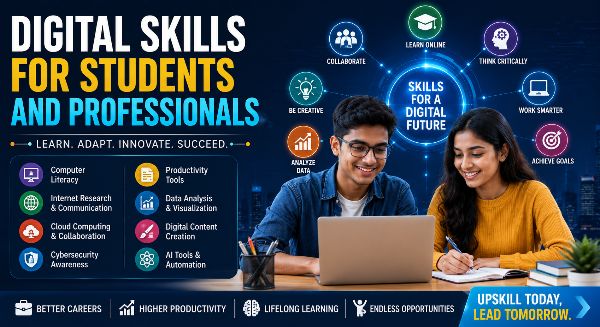
In today’s technology-driven world, digital skills have become essential for academic success, career growth, and professional development. Whether you are a student preparing for future opportunities or a working professional aiming to stay competitive, mastering digital skills can significantly improve your productivity, employability, and confidence. As industries embrace artificial intelligence, cloud computing, remote work, and digital transformation, individuals with strong digital competencies are better equipped to succeed in an ever-changing job market.
Digital skills are no longer limited to IT professionals. Almost every career today requires the ability to use technology effectively, communicate digitally, analyze information, and adapt to new digital tools.
What Are Digital Skills?
Digital skills refer to the ability to use computers, smartphones, software applications, and the internet effectively for learning, communication, problem-solving, collaboration, and productivity.
These skills include:
- Computer literacy
- Internet browsing
- Online communication
- Digital collaboration
- Cybersecurity awareness
- Data management
- Content creation
- Artificial Intelligence tools
Developing digital skills prepares individuals for both education and the modern workplace.
Why Digital Skills Matter
Technology is reshaping every industry, making digital competence one of the most valuable career assets.
Benefits of digital skills include:
- Better job opportunities
- Higher productivity
- Improved communication
- Easier collaboration
- Greater career flexibility
- Better problem-solving
- Increased innovation
- Lifelong learning opportunities
Digital literacy enables individuals to work smarter and adapt quickly to technological changes.
Basic Computer Skills
Every student and professional should master essential computer operations.
Important computer skills include:
- Operating systems
- File management
- Keyboard shortcuts
- Microsoft Word
- Excel
- PowerPoint
- PDF management
- Printing and scanning
These foundational skills improve efficiency in academic and workplace environments.
Internet Research Skills
Finding reliable information online is an essential digital competency.
Students and professionals should learn to:
- Use search engines effectively
- Evaluate website credibility
- Verify information
- Organize research
- Use academic resources
- Save and bookmark useful content
Good research skills support informed decision-making and continuous learning.
Digital Communication
Professional communication increasingly happens through digital platforms.
Essential communication tools include:
- Video conferencing
- Instant messaging
- Online collaboration platforms
- Professional networking websites
- Virtual meetings
Strong digital communication improves teamwork and workplace professionalism.
Productivity Software
Modern workplaces rely heavily on productivity tools.
Popular applications include:
- Word processors
- Spreadsheet software
- Presentation tools
- Calendar management
- Note-taking applications
- Task management software
Learning these tools helps students complete assignments efficiently and professionals manage projects successfully.
Artificial Intelligence Skills
Artificial Intelligence is transforming education and business.
Useful AI skills include:
- AI-assisted writing
- Research assistance
- Data analysis
- Productivity automation
- Image generation
- Content creation
- AI-powered presentations
Understanding AI responsibly increases efficiency while supporting innovation.
Cybersecurity Awareness
Every internet user should understand basic cybersecurity principles.
Important topics include:
- Strong passwords
- Multi-factor authentication
- Phishing awareness
- Safe browsing
- Privacy protection
- Secure online payments
- Device security
Cybersecurity awareness protects both personal and professional information.
Cloud Computing Basics
Cloud technology enables users to access information from anywhere.
Popular cloud services include:
- Online file storage
- Cloud collaboration
- Document sharing
- File synchronization
- Backup solutions
Cloud computing supports remote learning and hybrid work environments.
Digital Content Creation
Content creation has become a valuable professional skill.
Students and professionals can learn:
- Graphic design
- Video editing
- Presentation design
- Document formatting
- Blogging
- Social media content
- Infographics
Creative digital skills enhance communication and personal branding.
Data Analysis Skills
Organizations increasingly rely on data-driven decision-making.
Useful analytical skills include:
- Spreadsheet analysis
- Data visualization
- Basic statistics
- Dashboard creation
- Report generation
- Business analytics
Data literacy supports better planning and problem-solving.
Social Media Management
Professional use of social media extends beyond personal networking.
Digital professionals often manage:
- Business pages
- LinkedIn profiles
- Brand communication
- Customer engagement
- Online marketing
- Community management
Responsible social media usage builds professional credibility.
Collaboration Skills
Remote work has made digital collaboration essential.
Common collaboration tools include:
- Shared documents
- Team messaging platforms
- Video conferencing
- Online whiteboards
- Project management software
Effective collaboration improves teamwork and project outcomes.
Time Management with Digital Tools
Technology can help individuals organize work more efficiently.
Useful tools include:
- Digital calendars
- Task managers
- Reminder applications
- Note-taking software
- Productivity timers
Good organization improves academic performance and workplace productivity.
Continuous Learning
Technology evolves rapidly, making lifelong learning essential.
Students and professionals should regularly update their knowledge by learning:
- New software
- AI applications
- Cybersecurity practices
- Digital marketing
- Emerging technologies
- Industry-specific tools
Continuous learning supports long-term career success.
Career Opportunities Enhanced by Digital Skills
Digital skills are valuable across nearly every profession, including:
- Information Technology
- Marketing
- Finance
- Healthcare
- Education
- Engineering
- Media
- Human Resources
- Retail
- Government Services
Professionals with strong digital competencies often enjoy better career advancement opportunities.
Benefits of Digital Skills
Developing digital skills provides numerous personal and professional advantages:
- Better employability
- Higher productivity
- Stronger communication
- Greater confidence
- Career advancement
- Improved creativity
- Better adaptability
- Increased earning potential
Digital competence has become one of the most important skills in today’s workforce.
Prepare for the Future with Digital Skills
The future belongs to individuals who can confidently adapt to changing technologies and continuously upgrade their knowledge. Digital skills empower students to succeed academically while helping professionals remain competitive in a technology-driven workplace.
Whether you are preparing for your first job, advancing your career, starting a business, or exploring new opportunities, investing in digital skills is one of the smartest decisions you can make. From computer literacy and cybersecurity to artificial intelligence and cloud computing, every new skill strengthens your ability to thrive in the digital economy.
By embracing lifelong learning and staying updated with emerging technologies, students and professionals can unlock countless opportunities and build successful careers in the digital age.