
- July 22, 2026
- Posted by: admin
- Category: Blog
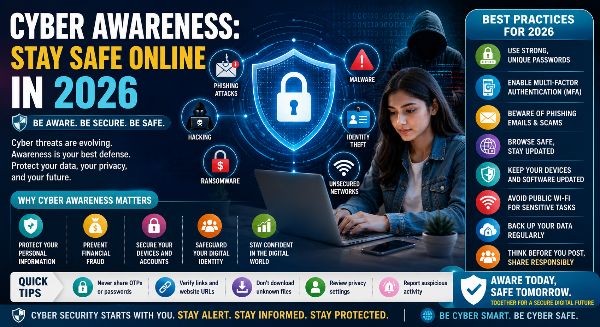
As our lives become increasingly connected through smartphones, computers, cloud services, and artificial intelligence, cybersecurity has become more important than ever. From online banking and digital payments to remote work, education, healthcare, and social media, people spend a significant portion of their daily lives online. While technology offers convenience and opportunities, it also exposes users to cyber threats such as phishing scams, identity theft, ransomware, malware, and online fraud.
In 2026, cyber awareness is no longer just an IT concern—it is an essential life skill. Every internet user, regardless of age or profession, must understand how to protect personal information, recognize online threats, and practice safe digital habits.
What is Cyber Awareness?
Cyber awareness refers to understanding online risks and adopting safe practices to protect personal data, devices, digital identities, and online accounts from cybercriminals.
Cyber awareness includes:
- Safe internet browsing
- Strong password management
- Protecting personal information
- Identifying scams
- Safe online communication
- Secure digital payments
- Responsible social media usage
- Understanding cybersecurity basics
Being cyber aware reduces the likelihood of becoming a victim of online attacks.
Why Cyber Awareness Matters in 2026
Cyber threats continue to evolve as technology advances. Artificial intelligence, cloud computing, and connected devices have increased both opportunities and security challenges.
Cyber awareness helps individuals:
- Prevent financial fraud
- Protect personal information
- Secure digital identities
- Avoid phishing attacks
- Protect business information
- Use digital services confidently
- Build responsible online habits
- Reduce cybersecurity risks
Cybersecurity begins with informed users.
Create Strong Passwords
Passwords remain the first line of defense against unauthorized access.
Best practices include:
- Use at least 12–16 characters
- Combine uppercase and lowercase letters
- Include numbers and symbols
- Avoid personal information
- Never reuse passwords
- Update passwords regularly
Password managers can help securely store and generate complex passwords.
Enable Multi-Factor Authentication (MFA)
Multi-Factor Authentication adds an extra layer of security beyond passwords.
Common authentication methods include:
- SMS verification codes
- Authentication apps
- Security keys
- Biometric verification
- Email verification
Even if a password is compromised, MFA significantly reduces the risk of unauthorized access.
Recognize Phishing Scams
Phishing remains one of the most common cyber threats.
Be cautious of:
- Suspicious emails
- Fake websites
- Urgent payment requests
- Unexpected attachments
- Fake customer support calls
- Fraudulent QR codes
Always verify the sender before clicking links or downloading files.
Browse the Internet Safely
Safe browsing habits reduce exposure to cyber threats.
Remember to:
- Visit secure websites (HTTPS)
- Avoid unknown downloads
- Keep browsers updated
- Verify website authenticity
- Avoid clicking suspicious advertisements
Safe browsing protects both personal information and devices.
Protect Personal Information
Oversharing online increases cybersecurity risks.
Avoid publicly sharing:
- Banking information
- Passwords
- Identity documents
- Home addresses
- Travel plans
- Confidential work information
Think carefully before posting sensitive information online.
Secure Your Devices
Computers, smartphones, and tablets should always be properly protected.
Recommended practices include:
- Install antivirus software
- Enable automatic updates
- Lock devices with PINs or biometrics
- Encrypt sensitive data
- Back up important files
- Remove unused applications
Regular maintenance improves both security and device performance.
Stay Safe on Social Media
Social media platforms can expose users to scams and privacy risks.
Protect yourself by:
- Reviewing privacy settings
- Accepting requests only from trusted people
- Avoiding suspicious links
- Limiting personal information
- Reporting fake accounts
- Being cautious with public posts
Responsible social media usage protects your digital reputation.
Safe Digital Payments
Online financial transactions require extra caution.
Best practices include:
- Use trusted payment platforms
- Verify merchant websites
- Enable transaction alerts
- Never share OTPs
- Monitor bank statements
- Avoid public Wi-Fi for banking
Safe payment habits reduce financial risks.
Beware of Artificial Intelligence Scams
Cybercriminals increasingly use AI to create convincing scams.
Common AI-enabled threats include:
- Deepfake videos
- Voice cloning
- AI-generated phishing emails
- Fake customer support chats
- Fraudulent investment offers
Always verify unexpected requests through official channels.
Public Wi-Fi Safety
Public Wi-Fi networks often lack adequate security.
When using public Wi-Fi:
- Avoid banking transactions
- Use a Virtual Private Network (VPN)
- Disable automatic file sharing
- Log out after use
- Avoid accessing sensitive accounts
Secure connections help protect personal information.
Keep Software Updated
Software updates often include important security improvements.
Regularly update:
- Operating systems
- Mobile apps
- Browsers
- Antivirus software
- Office applications
- Smart devices
Outdated software is a common target for cyberattacks.
Learn Basic Cybersecurity
Cyber awareness improves through continuous education.
Topics worth learning include:
- Malware protection
- Ransomware prevention
- Cloud security
- Digital privacy
- Data backup
- Safe email practices
- Cyber laws
- Responsible digital citizenship
Continuous learning keeps users prepared for emerging threats.
Cyber Awareness in the Workplace
Employees play a crucial role in protecting organizational data.
Businesses should encourage:
- Security awareness training
- Safe password practices
- Data protection policies
- Incident reporting
- Secure remote work
- Device management
A cyber-aware workforce significantly strengthens organizational security.
Benefits of Cyber Awareness
Developing cybersecurity skills provides numerous advantages:
- Greater online confidence
- Better protection from cybercrime
- Safer digital payments
- Improved privacy
- Stronger professional security
- Reduced financial risks
- Better digital reputation
- Responsible technology use
Cyber awareness protects both individuals and organizations.
Build a Safer Digital Future
Technology will continue to transform our lives, making cybersecurity an essential skill for everyone. In 2026, cyber awareness is not only about protecting devices—it is about protecting identities, finances, careers, and personal well-being.
Whether you are a student attending online classes, a professional working remotely, an entrepreneur managing digital transactions, or simply someone using social media and online banking, practicing safe online habits can significantly reduce cyber risks.
By staying informed, using strong security measures, and remaining alert to evolving cyber threats, you can enjoy the benefits of the digital world while protecting yourself and your loved ones from online dangers.