- July 15, 2026
- Posted by: admin
- Category: Blog
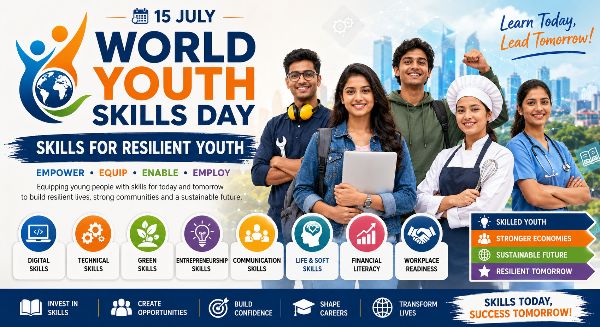
Every year on 15 July, the world celebrates World Youth Skills Day to recognize the importance of equipping young people with the skills needed for employment, entrepreneurship, and lifelong success. As industries rapidly evolve due to digital transformation, automation, and globalization, the need for practical and future-ready skills has never been greater.
The 2026 theme, “Skills for Resilient Youth,” highlights the importance of empowering young people with the knowledge, technical expertise, and life skills necessary to overcome challenges, adapt to changing work environments, and contribute to sustainable economic growth. By investing in education, vocational training, and skill development, societies can prepare youth to thrive in an uncertain and rapidly changing world.
What is World Youth Skills Day?
World Youth Skills Day is observed annually on 15 July to promote the strategic importance of equipping young people with skills for employment, decent work, entrepreneurship, and innovation.
The day encourages governments, educational institutions, industries, training organizations, and communities to work together to strengthen technical and vocational education and training (TVET) while promoting lifelong learning opportunities for youth.
It also serves as a reminder that skilled youth are essential for building resilient economies, inclusive societies, and sustainable development.
Why Skills Matter for Today’s Youth
The modern workplace is evolving faster than ever before. Advances in artificial intelligence, automation, digital technologies, and changing business models require young people to continuously learn and adapt.
Developing the right skills enables youth to:
- Secure better employment opportunities
- Become successful entrepreneurs
- Adapt to technological changes
- Improve problem-solving abilities
- Increase financial independence
- Build confidence
- Support innovation
- Contribute to community development
Skills provide the foundation for both personal and professional success.
Understanding Youth Resilience
Resilience refers to the ability to adapt, recover, and grow despite challenges, setbacks, or changing circumstances.
Resilient youth possess qualities such as:
- Adaptability
- Confidence
- Emotional intelligence
- Critical thinking
- Creativity
- Persistence
- Leadership
- Positive decision-making
Skill development strengthens these qualities and prepares young people for future challenges.
Technical and Vocational Skills
Technical and vocational education plays a significant role in preparing youth for employment.
Popular vocational skill areas include:
- Information Technology
- Digital Marketing
- Artificial Intelligence
- Data Analytics
- Graphic Design
- Hospitality Management
- Healthcare Services
- Beauty and Wellness
- Electrician Training
- Plumbing
- Welding
- Bakery and Confectionery
- Fashion Design
- Automotive Technology
These practical skills improve employability while addressing industry demands.
Digital Skills for the Future
Digital literacy has become essential across nearly every profession.
Important digital skills include:
- Computer literacy
- Online communication
- Social media management
- Website development
- Cloud computing
- Cybersecurity awareness
- Artificial Intelligence tools
- Data management
- Digital collaboration
Digital skills open opportunities in both traditional employment and remote work.
Entrepreneurship Skills
Not every young person will seek traditional employment. Many aspire to build their own businesses.
Entrepreneurship training helps youth develop:
- Business planning
- Financial management
- Marketing strategies
- Innovation
- Leadership
- Customer service
- Risk management
- Business communication
Entrepreneurship creates jobs while driving economic growth.
Soft Skills for Career Success
Employers increasingly value interpersonal skills alongside technical knowledge.
Essential soft skills include:
- Communication
- Teamwork
- Leadership
- Time management
- Problem-solving
- Emotional intelligence
- Adaptability
- Decision-making
These skills improve workplace performance and career advancement.
Financial Literacy
Understanding personal finance is an important life skill.
Young people should learn:
- Budgeting
- Saving
- Investing
- Responsible borrowing
- Financial planning
- Digital payments
- Tax awareness
Financial literacy supports long-term financial stability and independence.
Green Skills for Sustainable Development
As industries embrace sustainability, demand for green skills continues to grow.
Examples include:
- Renewable energy technologies
- Waste management
- Sustainable agriculture
- Water conservation
- Environmental protection
- Circular economy practices
- Green construction
Green skills contribute to both environmental protection and future employment.
Lifelong Learning
Skill development does not end after completing formal education.
Continuous learning helps individuals:
- Stay competitive
- Learn emerging technologies
- Improve productivity
- Adapt to industry changes
- Build professional confidence
Lifelong learning is essential in today’s rapidly changing economy.
Role of Governments and Educational Institutions
Governments, schools, colleges, and training organizations play a vital role in empowering youth through:
- Vocational education
- Skill development programs
- Apprenticeships
- Industry partnerships
- Digital learning
- Career counseling
- Entrepreneurship support
- Employment services
Collaborative efforts create stronger pathways from education to employment.
The Role of Industry
Businesses contribute significantly by:
- Offering internships
- Providing apprenticeships
- Supporting skill development
- Delivering workplace training
- Encouraging innovation
- Promoting inclusive employment
Industry partnerships help align education with real-world workforce requirements.
Benefits of Skill Development
Investing in youth skills creates benefits for individuals, businesses, and society.
Key benefits include:
- Higher employability
- Better income opportunities
- Reduced unemployment
- Increased innovation
- Stronger economies
- Greater social inclusion
- Improved productivity
- Sustainable development
A skilled youth population strengthens national competitiveness and economic resilience.
Building a Future of Resilient Youth
The theme “Skills for Resilient Youth” reminds us that empowering young people with practical, technical, digital, and life skills is one of the most effective ways to prepare them for the future. In a world shaped by rapid technological change, climate challenges, and evolving job markets, resilience is built through continuous learning and adaptability.
World Youth Skills Day is more than a celebration—it is a call to action for governments, educators, industries, and communities to invest in the next generation. By providing quality education, vocational training, and equal access to skill development opportunities, we can help young people unlock their potential, achieve meaningful careers, and become leaders who drive innovation and sustainable growth.
The future belongs to skilled, confident, and resilient youth who are ready to shape a better world for themselves and future generations.