
- June 18, 2026
- Posted by: admin
- Category: Blog
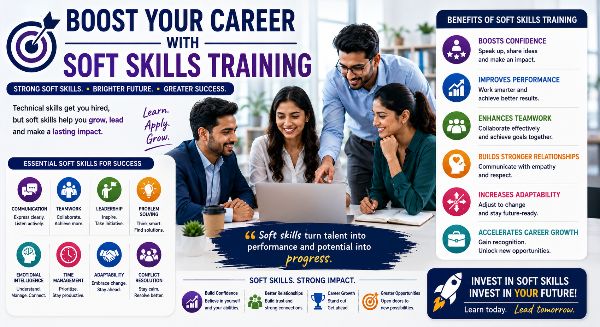
In today’s competitive job market, technical expertise alone is no longer enough to guarantee professional success. Employers increasingly value individuals who possess strong interpersonal abilities, communication skills, adaptability, and emotional intelligence. These qualities, commonly known as soft skills, play a critical role in workplace performance and career advancement. Soft skills training helps professionals develop the personal and professional capabilities needed to excel in modern workplaces and achieve long-term career growth.
What Are Soft Skills?
Soft skills are personal attributes and interpersonal abilities that influence how individuals interact, communicate, and work with others. Unlike technical skills, which are job-specific, soft skills are transferable across industries and professions.
Examples of important soft skills include communication, teamwork, leadership, problem-solving, adaptability, emotional intelligence, time management, and conflict resolution.
Why Soft Skills Matter in Today’s Workplace
Modern organizations operate in collaborative and fast-changing environments. Employees are expected to work effectively with diverse teams, communicate clearly, and adapt to new challenges.
Strong soft skills help professionals build relationships, manage workplace situations effectively, and contribute positively to organizational success. Many employers consider soft skills equally important as technical qualifications when hiring and promoting employees.
The Growing Demand for Soft Skills
Automation and technological advancements continue to transform industries worldwide. While technical tasks can often be automated, human-centered skills remain essential.
Employers increasingly seek professionals who can think critically, communicate effectively, solve complex problems, and lead teams. These abilities make soft skills one of the most valuable assets in today’s workforce.
Communication Skills: The Foundation of Success
Communication is one of the most important soft skills in any profession. Effective communication involves expressing ideas clearly, listening actively, and understanding the perspectives of others.
Strong communication skills improve workplace collaboration, reduce misunderstandings, and strengthen professional relationships. They are essential for meetings, presentations, negotiations, and daily interactions.
Building Confidence and Professional Presence
Confidence allows professionals to share ideas, take initiative, and handle responsibilities effectively. Soft skills training often focuses on improving self-confidence, public speaking, and professional behavior.
Confident individuals are more likely to seize opportunities, contribute to discussions, and pursue leadership roles.
Teamwork and Collaboration
Success in most organizations depends on teamwork. Employees must work together to achieve common goals, solve problems, and complete projects efficiently.
Soft skills training helps individuals understand team dynamics, communicate effectively with colleagues, and contribute positively to collaborative environments.
Leadership Development
Leadership is not limited to management positions. Professionals at every level benefit from leadership skills such as decision-making, accountability, motivation, and strategic thinking.
Soft skills training helps individuals develop leadership qualities that prepare them for greater responsibilities and career advancement.
Emotional Intelligence in the Workplace
Emotional intelligence refers to the ability to understand, manage, and respond effectively to emotions. It helps professionals build stronger relationships, manage stress, and handle workplace conflicts constructively.
Individuals with high emotional intelligence often demonstrate better communication, empathy, and leadership capabilities.
Problem-Solving and Critical Thinking
Employers value professionals who can analyze situations, identify solutions, and make informed decisions. Soft skills training strengthens critical thinking and problem-solving abilities that support workplace success.
These skills enable employees to handle challenges confidently and contribute to organizational growth.
Adaptability and Flexibility
The business world is constantly evolving. New technologies, market trends, and workplace practices require professionals to adapt quickly.
Adaptability helps individuals remain effective during periods of change and uncertainty. Soft skills training encourages a growth mindset and prepares professionals to thrive in dynamic environments.
Time Management and Productivity
Managing time effectively is essential for maintaining productivity and meeting deadlines. Soft skills training often includes techniques for prioritizing tasks, organizing workloads, and reducing distractions.
Good time management helps professionals achieve goals while maintaining a healthy work-life balance.
Conflict Resolution Skills
Disagreements and workplace conflicts are inevitable. Soft skills training teaches professionals how to address conflicts respectfully and find constructive solutions.
Strong conflict resolution skills improve teamwork, reduce workplace tension, and support positive working relationships.
Networking and Relationship Building
Professional success often depends on the ability to build and maintain strong relationships. Networking helps individuals connect with colleagues, mentors, industry experts, and potential employers.
Soft skills training enhances interpersonal communication and relationship-building abilities that contribute to career growth.
Benefits of Soft Skills Training
Professionals who invest in soft skills development often experience:
- Improved communication abilities
- Greater confidence and self-esteem
- Stronger leadership potential
- Better teamwork and collaboration
- Enhanced problem-solving skills
- Increased adaptability
- Higher workplace productivity
- Greater career advancement opportunities
These benefits support both personal and professional success.
Soft Skills and Career Advancement
Many career opportunities are influenced by more than technical expertise. Promotions, leadership roles, client-facing positions, and managerial responsibilities often require strong interpersonal skills.
Professionals who continuously develop their soft skills are better positioned to stand out, build influence, and achieve long-term career success.
Invest in Your Future
Soft skills are essential tools for navigating today’s workplace and building a successful career. While technical knowledge may help secure a job, soft skills often determine how far individuals progress in their professional journeys.
By investing in soft skills training, professionals can improve communication, strengthen relationships, increase confidence, and unlock new opportunities for growth. In an increasingly connected and competitive world, soft skills are no longer optional—they are a key driver of career success.