
- June 16, 2026
- Posted by: admin
- Category: Blog
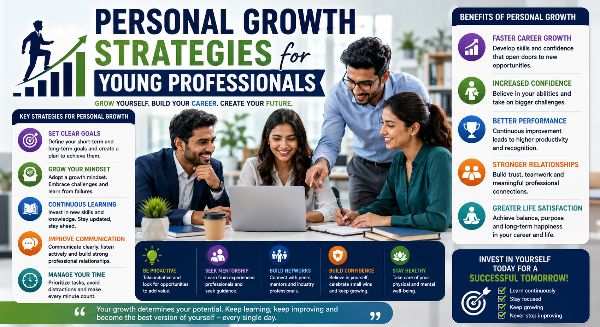
In today’s rapidly evolving professional landscape, technical qualifications alone are not enough to ensure long-term success. Young professionals must continuously develop their skills, mindset, and personal capabilities to remain competitive and achieve their career goals. Personal growth is a lifelong journey that helps individuals build confidence, improve performance, strengthen relationships, and unlock new opportunities. By focusing on personal development early in their careers, young professionals can create a strong foundation for future success.
Understanding Personal Growth
Personal growth refers to the continuous process of improving knowledge, skills, habits, attitudes, and overall potential. It involves becoming more self-aware, developing strengths, overcoming weaknesses, and striving for continuous improvement.
Personal growth goes beyond career advancement. It contributes to emotional well-being, confidence, leadership abilities, and overall life satisfaction.
Why Personal Growth Matters for Young Professionals
The early years of a career are filled with learning experiences, challenges, and opportunities. Professionals who actively invest in personal development often adapt more quickly to change and perform better in competitive environments.
Personal growth helps individuals become more resilient, proactive, and prepared to handle increasing responsibilities as their careers progress.
Setting Clear Career Goals
Goal setting is one of the most effective personal growth strategies. Clear goals provide direction and help individuals stay focused on their priorities.
Young professionals should identify short-term and long-term objectives related to career development, skill enhancement, and personal achievements. Well-defined goals create motivation and encourage consistent progress.
Developing a Growth Mindset
A growth mindset is the belief that abilities and intelligence can improve through effort, learning, and persistence.
Professionals with a growth mindset view challenges as opportunities to learn rather than obstacles to avoid. They are more likely to embrace feedback, take calculated risks, and continuously seek improvement.
Investing in Continuous Learning
The modern workplace evolves quickly due to technological advancements and changing industry demands. Continuous learning helps professionals remain relevant and competitive.
Learning opportunities may include:
- Professional certifications
- Online courses
- Workshops and seminars
- Industry conferences
- Reading books and articles
- Learning new technologies
Continuous skill development increases confidence and opens doors to new career opportunities.
Building Strong Communication Skills
Effective communication is essential for career success. Young professionals must learn how to express ideas clearly, listen actively, and communicate professionally.
Strong communication skills improve teamwork, networking, leadership potential, and workplace relationships.
Managing Time Effectively
Time management is a critical skill for personal and professional growth. Learning how to prioritize tasks, set deadlines, and manage workloads improves productivity and reduces stress.
Professionals who use their time effectively are better able to achieve goals while maintaining a healthy work-life balance.
Seeking Feedback and Mentorship
Constructive feedback provides valuable insights into strengths and areas for improvement. Young professionals who actively seek feedback demonstrate a commitment to growth.
Mentorship is equally valuable. Experienced mentors can offer guidance, industry knowledge, career advice, and support during important career decisions.
Building Confidence and Self-Belief
Confidence plays a significant role in career development. Confident professionals are more likely to take initiative, share ideas, and pursue new opportunities.
Confidence grows through preparation, experience, skill development, and positive self-reflection. Celebrating small achievements helps reinforce self-belief and motivation.
Networking and Relationship Building
Professional relationships are important for career growth. Networking allows young professionals to connect with peers, industry experts, mentors, and potential employers.
Building strong relationships creates opportunities for collaboration, learning, and career advancement.
Developing Emotional Intelligence
Emotional intelligence helps individuals understand and manage emotions while building positive relationships with others.
Young professionals with strong emotional intelligence communicate effectively, handle stress better, resolve conflicts constructively, and demonstrate strong leadership potential.
Embracing Challenges and Change
Career growth often requires stepping outside comfort zones. Taking on new projects, responsibilities, and learning opportunities helps individuals develop valuable skills and confidence.
Professionals who embrace change are better equipped to succeed in dynamic and competitive environments.
Prioritizing Health and Well-Being
Personal growth is closely connected to physical and mental well-being. Maintaining healthy habits supports productivity, focus, and long-term success.
Important well-being practices include:
- Regular exercise
- Healthy nutrition
- Quality sleep
- Stress management
- Mindfulness practices
- Work-life balance
A healthy lifestyle improves overall performance and resilience.
Building Leadership Skills Early
Leadership is not limited to management positions. Young professionals can develop leadership skills by taking initiative, supporting colleagues, solving problems, and contributing positively to teams.
Early leadership development prepares individuals for future responsibilities and career advancement opportunities.
Benefits of Personal Growth
Professionals who focus on personal growth often experience:
- Increased confidence
- Better communication skills
- Stronger problem-solving abilities
- Improved adaptability
- Greater career opportunities
- Enhanced leadership potential
- Higher job satisfaction
- Better work-life balance
These benefits contribute to long-term personal and professional success.
Creating a Future of Success
Personal growth is one of the most valuable investments young professionals can make. By continuously learning, setting goals, building relationships, and developing essential workplace skills, individuals can accelerate their career progress and achieve meaningful success.
The journey of personal development never ends. Each step taken toward self-improvement creates new opportunities, strengthens professional capabilities, and builds a strong foundation for a rewarding and successful career.