
- June 9, 2026
- Posted by: admin
- Category: Blog
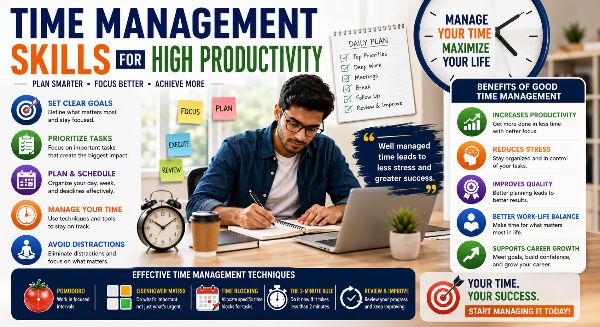
Time is one of the most valuable resources available to every individual. Unlike money or other assets, time cannot be recovered once it is spent. In today’s fast-paced world, managing time effectively has become essential for achieving personal and professional success. Strong time management skills help individuals complete tasks efficiently, reduce stress, improve productivity, and maintain a healthy work-life balance.
What is Time Management?
Time management is the process of planning, organizing, and controlling how time is spent on various activities. It involves setting priorities, scheduling tasks, and using available time effectively to achieve specific goals.
Good time management does not mean working longer hours. Instead, it focuses on working smarter, improving efficiency, and maximizing results within available time.
Why Time Management Matters
Effective time management helps individuals accomplish more in less time. It improves focus, reduces procrastination, and creates opportunities for personal and professional growth.
People who manage their time well are often more productive, less stressed, and better prepared to handle responsibilities and unexpected challenges.
The Link Between Time Management and Productivity
Productivity is about achieving meaningful results efficiently. Poor time management often leads to missed deadlines, unfinished tasks, and unnecessary stress.
When time is managed effectively, individuals can focus on high-priority activities, minimize distractions, and maintain consistent performance throughout the day.
Setting Clear Goals
Successful time management begins with clear objectives. Goals provide direction and help individuals focus on tasks that contribute to desired outcomes.
Setting specific, measurable, achievable, relevant, and time-bound goals improves motivation and ensures that efforts are aligned with priorities.
Prioritizing Tasks Effectively
Not all tasks have the same level of importance. Prioritization helps individuals focus on activities that have the greatest impact.
Identifying urgent and important tasks allows people to allocate their time wisely. Completing high-priority activities first increases productivity and reduces pressure.
Planning and Scheduling
Creating a daily or weekly schedule helps organize responsibilities and maintain structure. Planning provides clarity about what needs to be accomplished and when.
Using calendars, planners, task lists, or digital productivity tools helps individuals stay organized and avoid overlooking important commitments.
Overcoming Procrastination
Procrastination is one of the biggest obstacles to productivity. Delaying important tasks often increases stress and reduces work quality.
Breaking large tasks into smaller steps, setting deadlines, and eliminating distractions can help overcome procrastination and encourage consistent progress.
Managing Distractions
Modern workplaces and digital environments present numerous distractions, including social media, emails, and constant notifications.
Reducing distractions by creating focused work periods, limiting interruptions, and maintaining a productive environment improves concentration and efficiency.
The Importance of Focus
Multitasking is often mistaken for productivity, but constantly switching between tasks can reduce efficiency and increase errors.
Focusing on one task at a time improves quality, speed, and overall performance. Concentrated effort often produces better results than divided attention.
Delegation and Teamwork
Effective time management also involves recognizing when to delegate tasks. Delegating appropriate responsibilities allows individuals to focus on higher-priority work.
In team environments, collaboration and delegation improve efficiency and ensure that workloads are distributed effectively.
Taking Breaks for Better Performance
Working continuously without breaks can lead to fatigue and reduced productivity. Regular breaks help refresh the mind and improve focus.
Short periods of rest during the day can increase energy levels, creativity, and overall work performance.
Balancing Work and Personal Life
Time management is not only about professional success—it also supports personal well-being. Allocating time for family, hobbies, exercise, and relaxation contributes to a healthier and more balanced lifestyle.
A well-balanced schedule reduces burnout and improves long-term productivity.
Leveraging Productivity Tools
Technology offers numerous tools that help with time management. Task management apps, calendars, reminder systems, and project management platforms can improve organization and efficiency.
Using the right tools simplifies planning and helps individuals stay on track with their goals.
Benefits of Strong Time Management Skills
Individuals who develop effective time management skills often experience:
- Increased productivity
- Better focus and concentration
- Reduced stress levels
- Improved decision-making
- Higher work quality
- Better work-life balance
- Greater career growth opportunities
These benefits contribute to both professional success and personal satisfaction.
Achieve More Through Smart Time Management
Time management is a skill that can be learned and improved through practice. By setting clear goals, prioritizing tasks, managing distractions, and maintaining a structured schedule, individuals can significantly enhance their productivity.
Success is not about being busy all the time—it is about using time wisely to achieve meaningful results. Strong time management skills empower individuals to accomplish more, reduce stress, and create a balanced and productive life.