
- May 2, 2026
- Posted by: admin
- Category: Blog
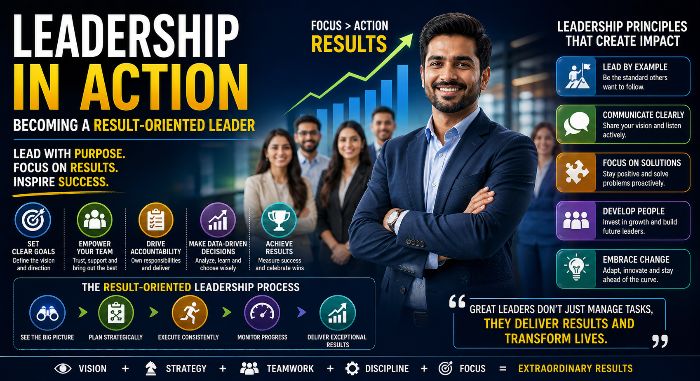
In today’s dynamic and competitive environment, leadership is no longer defined by authority alone—it is measured by results. Organizations seek leaders who can inspire teams, drive performance, and deliver measurable outcomes. A result-oriented leader focuses on goals, accountability, and execution while empowering others to achieve success. This approach not only improves productivity but also builds strong, high-performing teams.
Understanding Result-Oriented Leadership
Result-oriented leadership is about aligning actions with outcomes. It emphasizes setting clear objectives, tracking progress, and ensuring that efforts lead to tangible results.
Unlike traditional leadership styles that may focus heavily on processes, result-oriented leaders prioritize impact. They create a culture where performance, efficiency, and accountability are central to success.
Setting Clear Goals and Expectations
A result-oriented leader begins by defining clear and achievable goals. These goals provide direction and help teams understand what is expected of them.
Breaking down larger objectives into smaller, measurable targets makes it easier to track progress. Clear expectations reduce confusion and enable team members to focus on delivering results.
Driving Accountability and Ownership
Accountability is a key trait of effective leadership. Result-oriented leaders encourage team members to take ownership of their responsibilities.
By assigning clear roles and responsibilities, leaders ensure that everyone contributes to the overall objective. Regular check-ins and performance reviews help maintain accountability and keep teams on track.
Making Data-Driven Decisions
Successful leaders rely on data to guide their decisions. Analyzing performance metrics, feedback, and outcomes helps identify what works and what needs improvement.
Data-driven decision-making reduces uncertainty and increases the likelihood of achieving desired results. It also helps in optimizing strategies and improving efficiency.
Building a High-Performance Team
A leader’s success depends on the strength of their team. Result-oriented leaders focus on building skilled, motivated, and collaborative teams.
They invest in training, encourage open communication, and create an environment where individuals can perform at their best. Recognizing achievements and providing constructive feedback further enhances team performance.
Effective Communication and Clarity
Clear communication is essential for achieving results. Leaders must convey goals, expectations, and feedback effectively.
Open communication ensures that team members are aligned with the organization’s vision and understand their role in achieving it. It also helps in resolving issues quickly and maintaining transparency.
Adapting to Change and Challenges
In a rapidly changing environment, adaptability is crucial. Result-oriented leaders are flexible and open to change. They adjust strategies based on new information and challenges.
This ability to adapt ensures that teams remain resilient and continue to perform even under pressure.
Focusing on Continuous Improvement
Continuous improvement is a hallmark of effective leadership. Result-oriented leaders constantly seek ways to enhance performance and efficiency.
They encourage innovation, learn from past experiences, and implement improvements that lead to better outcomes. This mindset fosters growth and long-term success.
Balancing Results with People
While achieving results is important, successful leaders also prioritize the well-being of their teams. A balanced approach ensures that productivity does not come at the cost of employee satisfaction.
Leaders who support and motivate their teams create a positive work culture, which ultimately leads to better performance and results.
Becoming a Result-Oriented Leader
Becoming a result-oriented leader requires a combination of skills, mindset, and discipline. It involves setting clear goals, taking responsibility, and leading by example.
Leaders must remain focused, adaptable, and committed to achieving outcomes while empowering their teams to succeed.
In today’s results-driven world, leadership is about action, impact, and accountability. By adopting a result-oriented approach, individuals can lead effectively, drive success, and create lasting value for their organizations.