
- April 29, 2026
- Posted by: admin
- Category: Blog
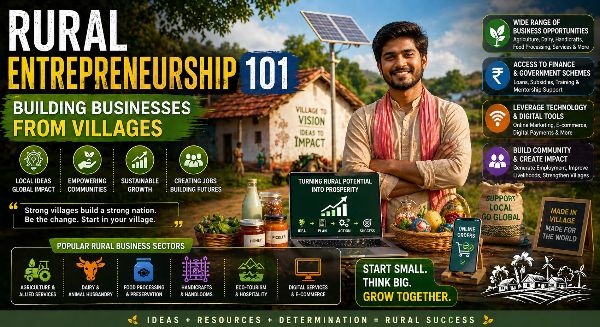
Rural India is rapidly emerging as a hub of opportunity, driven by increasing connectivity, government initiatives, and growing awareness of entrepreneurship. Villages are no longer limited to agriculture-based livelihoods; they are becoming centers for innovation, small businesses, and local enterprises. Rural entrepreneurship is empowering individuals to create sustainable income, generate employment, and contribute to the overall development of their communities.
Understanding Rural Entrepreneurship
Rural entrepreneurship refers to the establishment of businesses in villages or semi-urban areas, often using local resources and skills. These businesses can range from agriculture-based ventures and handicrafts to digital services and small-scale manufacturing.
The focus is on creating value within the local ecosystem while addressing the unique challenges and needs of rural markets. Entrepreneurs in villages often combine traditional knowledge with modern techniques to build sustainable enterprises.
Identifying Opportunities in Villages
Rural areas offer a wide range of business opportunities due to untapped markets and local demand. Agriculture, dairy farming, food processing, handicrafts, and eco-tourism are some of the most popular sectors.
With the rise of digital connectivity, opportunities in online services, e-commerce, and digital marketing are also growing. Entrepreneurs can leverage local resources and skills to create products and services that cater to both local and urban markets.
Leveraging Government Support and Schemes
The government of India has introduced several schemes to promote rural entrepreneurship, such as financial assistance, skill development programs, and infrastructure support.
Initiatives like startup funding, microfinance, and rural development programs help reduce barriers to entry. Entrepreneurs can benefit from subsidies, training, and mentorship opportunities to grow their businesses.
Building a Sustainable Business Model
A successful rural business requires a clear and sustainable business model. This includes identifying target customers, setting competitive pricing, and ensuring efficient distribution channels.
Entrepreneurs must focus on quality, affordability, and consistency to build trust among customers. A strong business model ensures long-term growth and stability.
Using Technology for Growth
Technology is playing a crucial role in transforming rural businesses. Smartphones, internet access, and digital platforms enable entrepreneurs to reach wider audiences and manage operations efficiently.
Online marketplaces allow rural products to be sold across the country, while digital payment systems simplify transactions. Social media marketing helps promote products and build brand awareness.
Overcoming Challenges
Rural entrepreneurs often face challenges such as limited infrastructure, access to finance, and lack of market exposure. However, these challenges can be overcome with innovation and resourcefulness.
Collaborations, community support, and training programs can help entrepreneurs build skills and access resources. Adapting to changing conditions and staying persistent are key to success.
Creating Employment and Social Impact
Rural entrepreneurship not only generates income for individuals but also creates employment opportunities for others in the community. This reduces migration to cities and supports local development.
By building businesses in villages, entrepreneurs contribute to economic growth, improve living standards, and promote self-reliance.
Scaling Rural Businesses
Scaling a rural business involves expanding operations, improving production capacity, and reaching new markets. Entrepreneurs can partner with distributors, explore online platforms, and invest in branding.
Innovation and continuous improvement are essential for growth. Businesses that adapt to market trends and customer needs are more likely to succeed.
The Future of Rural Entrepreneurship
With increasing digital penetration and policy support, the future of rural entrepreneurship in India looks promising. Villages are becoming centers of innovation, offering unique products and services.
Entrepreneurs who combine local knowledge with modern business practices can build successful ventures and create lasting impact.
Rural entrepreneurship is not just about business—it is about empowerment, sustainability, and community development. With the right approach, villages can become powerful engines of economic growth.