- April 18, 2026
- Posted by: admin
- Category: Blog
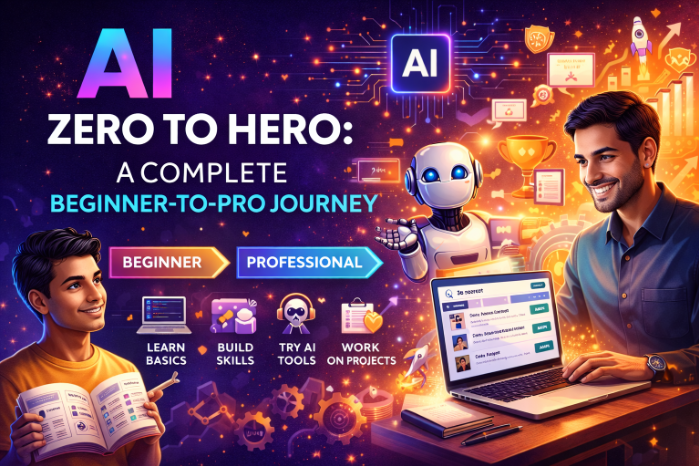
Artificial intelligence is no longer a futuristic concept—it is a present-day reality transforming industries, careers, and everyday life. From automation and data analysis to content creation and business optimization, AI is reshaping how we work and innovate. For beginners, entering the world of AI may seem overwhelming, but with the right approach and structured learning, anyone can progress from zero knowledge to professional expertise.
Understanding the Basics of AI
The journey begins with understanding what AI actually is. At its core, AI refers to machines or software that can perform tasks that typically require human intelligence, such as learning, reasoning, and decision-making.
Beginners should start with fundamental concepts like machine learning, data processing, and basic algorithms. Understanding how AI systems learn from data provides a strong foundation for further exploration. This stage is about building clarity, not complexity.
Building Strong Foundations
Before diving into advanced tools, it is important to develop essential skills. Basic programming knowledge, especially in languages like Python, helps in understanding how AI models work. Alongside this, knowledge of mathematics, statistics, and data handling strengthens problem-solving abilities.
Learning how to work with datasets, clean data, and interpret results is a key part of the foundation. These skills are crucial for anyone aiming to grow in the AI field.
Exploring AI Tools and Platforms
Once the basics are clear, the next step is to explore practical AI tools. Today, many user-friendly AI platforms allow beginners to experiment without deep technical knowledge.
From content generation tools to image creation and automation platforms, these tools provide hands-on experience. This stage helps learners understand real-world applications of AI and builds confidence in using technology effectively.
Working on Real-World Projects
The transition from beginner to intermediate level comes through practice. Working on real-world projects is essential to apply theoretical knowledge. Projects can include building simple chatbots, analyzing datasets, creating AI-generated content, or automating workflows.
Practical experience not only improves skills but also helps in building a portfolio, which is important for career opportunities. Employers and clients value hands-on experience over theoretical knowledge alone.
Specializing in a Domain
As learners progress, they can choose a specific area of interest within AI. Some may focus on data science, while others may explore machine learning, natural language processing, or AI-driven design and marketing.
Specialization allows individuals to develop deeper expertise and stand out in the job market. It also helps in aligning skills with career goals, whether it is freelancing, employment, or entrepreneurship.
Leveraging AI for Career Growth
AI skills open doors to a wide range of career opportunities. Professionals can work as data analysts, AI developers, digital marketers, automation experts, or consultants. Even non-technical roles benefit from AI knowledge, as businesses increasingly rely on data-driven decision-making.
Freelancers and entrepreneurs can use AI to create scalable solutions, automate processes, and generate income. The demand for AI skills is growing rapidly, making it a valuable investment for the future.
Continuous Learning and Adaptation
The field of AI is constantly evolving, with new tools, technologies, and trends emerging regularly. To stay relevant, learners must adopt a mindset of continuous learning.
Online courses, certifications, and practical experimentation help in staying updated. Engaging with AI communities and following industry developments also contributes to long-term growth.
From Beginner to Professional
The journey from zero to hero in AI is not about mastering everything at once. It is about consistent progress, practical application, and adaptability. With dedication and the right resources, anyone can transition from a beginner to a skilled professional.
AI is not limited to experts—it is a tool that empowers individuals to achieve more, innovate faster, and build successful careers in the digital age.